 listicle
Alkaline Water Benefits for Crews: What Works
Table of Contents
- What Alkaline Water Actually Is (And What It Isn't)
- The Science Behind Alkaline Water Benefits for Crews
- Hydration Best Practices for Outdoor Crews
- Alkaline Water for Construction Sites: Practical Applications
- Sourcing a High Volume Alkaline Water Supply
- Risks, Limitations, and Long-Term Safety
- Frequently Asked Questions
Last Updated: September 15, 2026
What Alkaline Water Actually Is (And What It Isn't)
Alkaline water is water with a pH level higher than 7.0, typically between 8 and 9.5, achieved either through natural mineral springs or artificial ionization processes. (pubmed.ncbi.nlm.nih.gov) The "alkaline water benefits for crews" conversation starts with understanding what this water actually is, not what marketers claim it to be.
The distinction matters because two very different products share the same label. Natural alkaline water picks up calcium, magnesium, and potassium as it flows through mineral-rich rock. Artificial alkaline water runs through an electrolysis machine that splits water molecules using electricity. Both raise pH. Neither guarantees the health outcomes printed on the bottle.
pH, Alkalinity, and the Minerals That Matter
The pH scale runs from 0 to 14, with 7 being neutral. Your blood maintains a tightly controlled pH between 7.35 and 7.45 through a process called acid-base balance (Physiology, Acid Base Balance). No beverage you drink changes that range. Your kidneys and lungs handle it.
What alkaline water does contain is mineral content. Calcium, magnesium, and potassium appear in varying concentrations depending on the source. These minerals support hydration status and electrolyte balance, which matter for crews working in heat.
The alkalinity of water refers to its capacity to neutralize acid, not its pH level. These are related but distinct measurements. A water can have high pH and low alkalinity, or the reverse.
The Science Behind Alkaline Water Benefits for Crews
The research on alkaline water benefits splits cleanly into two piles: peer-reviewed studies with defined endpoints, and marketing copy with none. The gap between them is where most crew supervisors get misled.
What Peer-Reviewed Research Actually Measures
Legitimate trials tend to test one of four endpoints. Knowing which endpoint a study used tells you more than the headline conclusion.
- Pepsin deactivation in reflux. Lab work has shown that water at pH 8.8 can irreversibly deactivate pepsin, the enzyme that drives the burning sensation in laryngopharyngeal reflux. This is a bench finding, not a clinical cure, but it is a real mechanism rather than a slogan.
- Blood and urine pH shifts after meals. Small crossover studies have measured whether alkaline water changes postprandial urine pH. It does, modestly. It does not change blood pH, because your kidneys and lungs defend that range regardless of what you drink.
- Bone resorption markers. A handful of small trials have looked at whether alkaline mineral water reduces markers like NTx (a collagen breakdown product used to estimate bone loss) in urine. Results have been mixed, sample sizes have been small, and no trial has run long enough to measure fracture outcomes.
- Hydration and exercise performance. Studies comparing alkaline water to standard water during anaerobic exercise have generally found no meaningful difference in performance, though some report slightly better hydration retention when the water also carried electrolytes.
The Mechanism That Actually Matters on a Job Site
The physiological effect crews care about is not pH. It is mineral delivery and palatability.
Calcium, magnesium, and potassium in naturally alkaline water arrive in ionic form, which the gut absorbs readily. During heavy sweating, you lose sodium and chloride in the largest quantities, plus smaller amounts of potassium and magnesium. Alkaline water is not a replacement for a proper electrolyte mix, but it does contribute to the mineral side of the ledger.
The second mechanism is behavioral. Workers drink more of water they find palatable. If alkaline water tastes smoother than the tap water at a site, intake goes up, and intake is the variable that actually prevents heat illness. That is a real, measurable benefit, and it has nothing to do with pH.
Where Marketing Claims Outrun the Evidence
Claims that alkaline water boosts metabolic rate, prevents chronic disease, or delivers antioxidant properties that fight cellular damage do not have solid clinical backing. These assertions live on product websites, not in peer-reviewed journals.
A common pattern in the marketing literature is to cite a single small study, strip the sample size and duration, and present the finding as settled. When you trace the citation back, you usually find a trial of 20 to 100 participants lasting a few weeks. That is enough to justify further research. It is not enough to justify a health claim.
The honest summary for a crew supervisor: alkaline water hydrates, it contains minerals that support electrolyte balance, and some workers prefer the taste. Those are the defensible benefits. Everything beyond that is a hypothesis.
Hydration Best Practices for Outdoor Crews
Hydration best practices for outdoor crews start with volume, not pH. Workers in hot environments need consistent fluid intake throughout the day, not just when thirst hits. Thirst signals dehydration already in progress.
The basics that matter more than water type:
- Drink before you're thirsty. Schedule water breaks every 15-20 minutes during heavy exertion in heat.
- Match intake to sweat loss. A worker sweating heavily can lose a liter or more per hour.
- Include electrolytes. Plain water alone can dilute sodium levels during prolonged sweating.
- Monitor hydration status. Dark urine indicates dehydration; pale yellow suggests adequate intake.
Alkaline water fits into this framework as a palatable option that some workers prefer drinking over plain tap water. Better taste can mean more consumption, which matters when the goal is keeping crews hydrated.
Alkaline Water for Construction Sites: Practical Applications
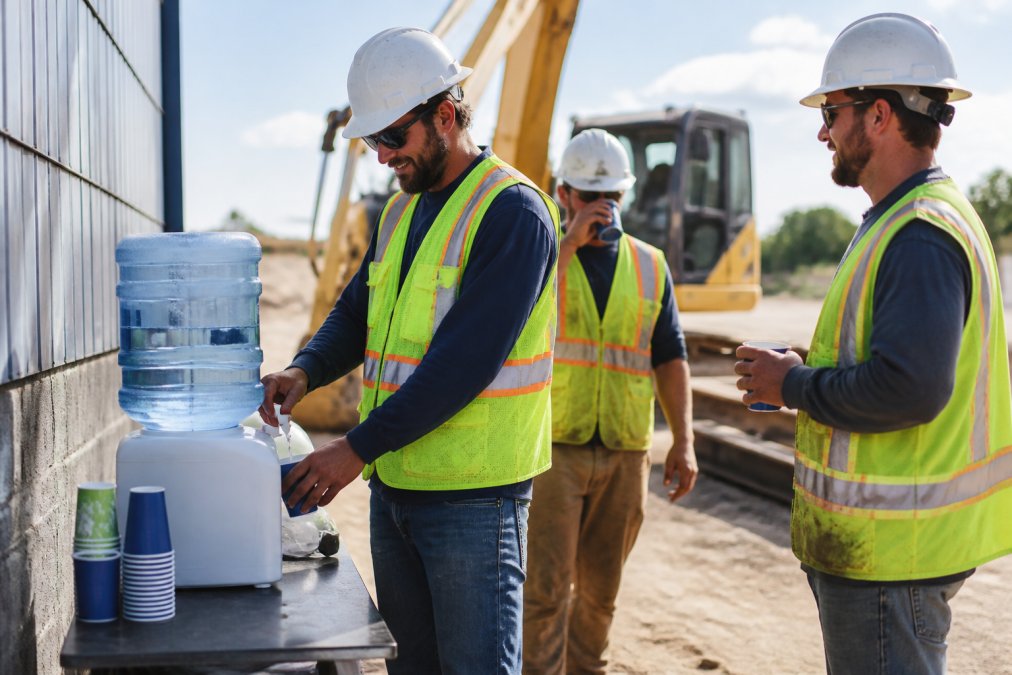
Alkaline water for construction sites solves a logistics problem as much as a hydration one. Crews need reliable access to clean water in volumes that match their headcount and work intensity. A 20-person crew working through a Texas summer requires a steady supply, not a case of bottles that runs out by Tuesday.
Practical applications on job sites include:
- Break station hydration. A centralized dispenser with alkaline water gives workers consistent access without individual bottle waste.
- Heat illness prevention. Supervisors can point to an actual hydration resource, not just a policy.
- Morale and retention. Workers notice when a company invests in decent water. It signals that management pays attention.
The operational question is sourcing. Bottled alkaline water gets expensive fast at crew scale. On-site ionizers require installation and maintenance. Bulk pickup from a local supplier often makes the most sense for operations that can't wait on delivery windows.
Sourcing a High Volume Alkaline Water Supply
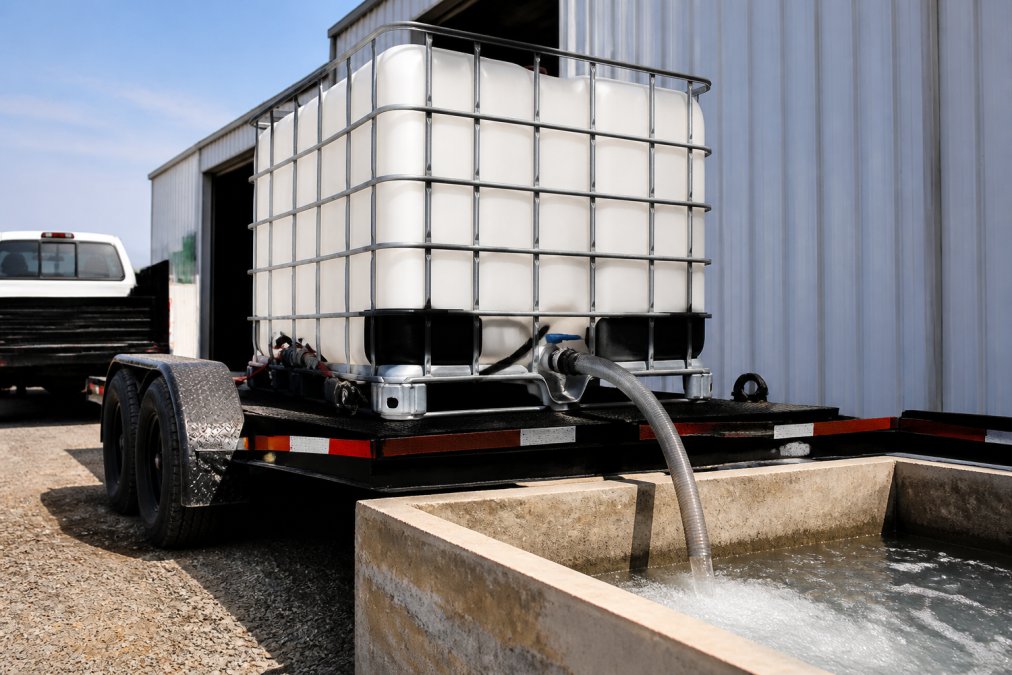
A high volume alkaline water supply requires a supplier who can handle peak demand without excuses. Data centers running 24/7, fire departments on call, and construction crews on deadline all share the same requirement: water when they need it, in the quantity they ordered.
Our True North, LLC provides high-volume alkaline water for operations across the region, with a pickup model that eliminates the delivery delays that create scrambling during summer demand spikes.
Pickup vs. Delivery: What Works for Demanding Operations
| Factor | Pickup | Delivery |
|---|---|---|
| Scheduling control | Full control over timing | Dependent on carrier routes |
| Delay risk | Minimal, you set the pace | Weather, traffic, driver shortages |
| Volume flexibility | Adjust order size on demand | Fixed to scheduled drops |
| Cost structure | Often lower per unit | Includes delivery premiums |
| Best for | Operations with vehicles and flexible staff | Sites without transport capacity |
Risks, Limitations, and Long-Term Safety
What Long-Term Daily Consumption Does to Stomach Acid
Groups where this matters most:
Alkaline Is Not the Same as Purified
The Real Risk Is Complacency
Frequently Asked Questions
What happens when you drink alkaline water every day?
Daily consumption of alkaline water with a pH of 8 to 9.5 is generally recognized as safe for healthy adults. Your body tightly regulates blood pH through homeostasis, so the water does not change your internal pH. What it can do is support hydration status and provide minerals like calcium, magnesium, and potassium. Some users report better digestion and less acid reflux, but long-term clinical trials on chronic disease outcomes are still limited.
Is alkaline water more effective than standard water for heat stress prevention?
Hydration efficiency matters more than pH when preventing heat stress. Alkaline water with electrolytes can support hydration status during anaerobic exercise and heavy sweating, and the mineral content helps replace what crews lose. That said, plain water plus electrolyte replacement works too. The practical advantage of alkaline water is that crews tend to drink more of it, which improves overall hydration on hot days.
What are the logistical advantages of a high volume alkaline water supply for job sites?
A high volume alkaline water supply eliminates the delays and volume caps that come with small-format bottled water. Bulk pickup means you control the schedule, avoid delivery windows that conflict with shift changes, and get consistent water quality across multiple sites. For data centers, industrial plants, and construction crews running around the clock, that reliability matters more than the pH number on the label.
What is the downside of alkaline water?
The main downsides are cost and, in rare cases, digestive upset. Some people experience temporary bloating or nausea when they first switch to high-pH water. Alkaline water also costs more per gallon than standard filtered water, especially in bottled form. For crews with kidney conditions or those taking acid-suppressing medications, it is worth checking with a physician before making it a daily staple.
Managing hydration for a crew that can't afford downtime means finding a water source that shows up when you do. Our True North, LLC supplies high-volume alkaline water with a straightforward pickup process, consistent quality, and the volume that data centers, construction sites, and fire departments actually need. Get a free estimate and see what reliable water access looks like for your operation.