 listicle
Texas Industrial Water Supply Solutions: 6 Options
Table of Contents
- Quick Comparison: Texas Industrial Water Supply Solutions
- Our True North, LLC: Bulk Water Pickup for High-Volume Operations
- Genesis Water Technologies: Modular Treatment Systems
- Samco Technologies: Zero Liquid Discharge Systems
- Hach: Water Quality Monitoring for Industrial Sites
- Schneider Electric: Utility Automation and Smart Monitoring
- Hubbell Power Systems: Utility Hardware and Distribution Components
- High-Volume Water Procurement for Data Centers
- Frequently Asked Questions
Last Updated: September 20, 2026
Quick Comparison: Texas Industrial Water Supply Solutions
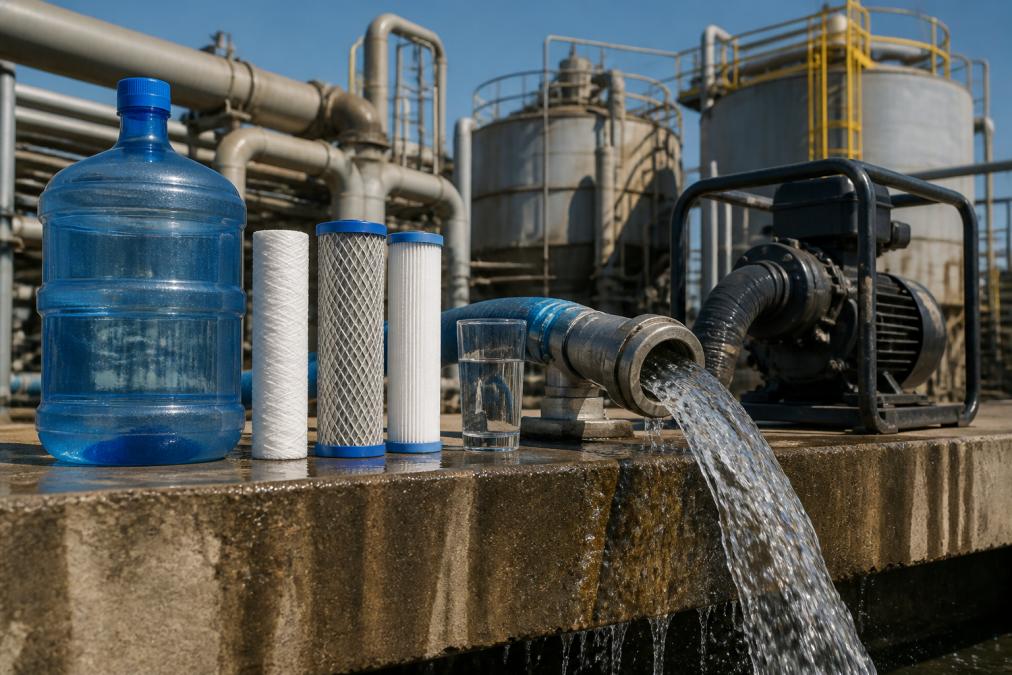
Industrial water supply is the sourcing, treatment, and distribution of water for manufacturing, cooling, and facility operations, delivered either by pickup, delivery, or on-site treatment. This guide from Our True North, LLC compares six options for industrial water supply in Texas, from bulk pickup to on-site treatment and monitoring hardware.
Water stress is a real constraint on industrial growth, and operators who plan around it now will be the ones still running during the next dry spell. The EPA's WaterSense program tracks industrial water efficiency guidance that many facilities use as a baseline.
| Solution | Type | Best For | Upfront Cost | Ongoing Cost |
|---|---|---|---|---|
| Our True North, LLC | Bulk alkaline water pickup | High-volume operations needing fast, consistent supply | Low | Per-gallon, volume-based |
| Genesis Water Technologies | Modular treatment systems | Facilities needing scalable on-site treatment | High | Energy and maintenance |
| Samco Technologies | Zero liquid discharge systems | Large plants with reuse mandates | Very high | Low after install |
| Hach | Water quality monitoring | Sites needing compliance-grade testing | Moderate | Reagent and calibration |
| Schneider Electric | Utility automation | Complex distribution networks | High | Licensing |
| Hubbell Power Systems | Utility hardware | Distribution infrastructure builds | Moderate | Replacement parts |
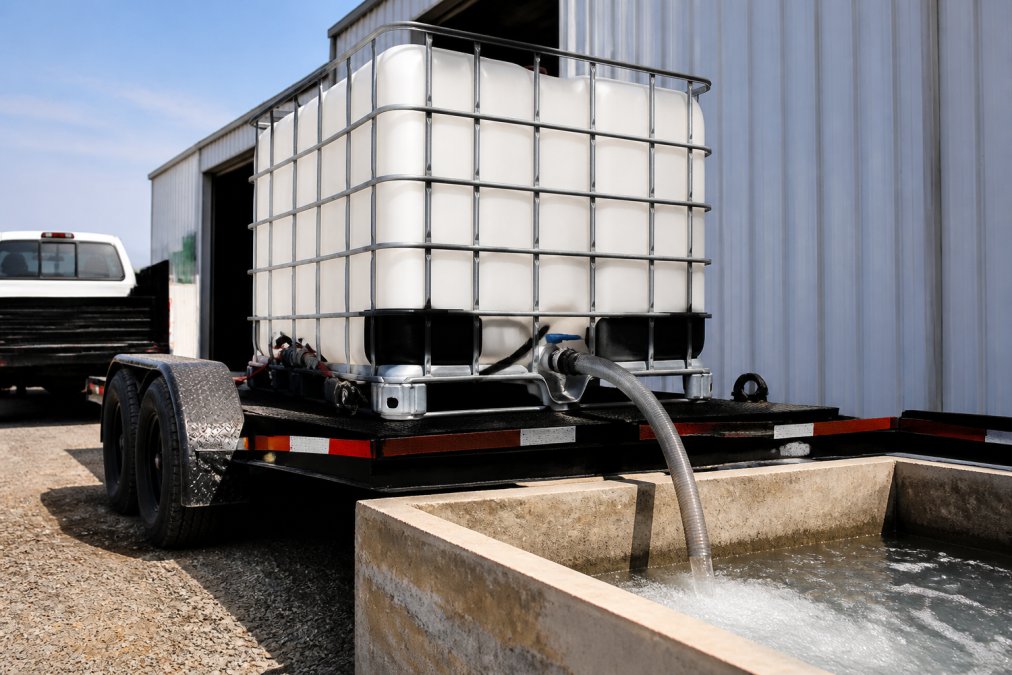
Our True North, LLC: Bulk Water Pickup for High-Volume Operations
Pros and Cons
What works: consistent water quality, flexible scheduling, and no dependency on third-party delivery windows. The local source keeps turnaround short for facilities in the region.
Genesis Water Technologies: Modular Treatment Systems
Genesis Water Technologies builds modular treatment systems that scale capacity as your needs grow. The modular design lets a facility add filtration and disinfection capacity in stages rather than committing to a full buildout upfront.
Samco Technologies: Zero Liquid Discharge Systems
Samco Technologies engineers zero liquid discharge systems that recover water for reuse instead of sending it to a drain. Their high-volume units process from 1 to 3,000 GPM, with automated controls for real-time monitoring.
Hach: Water Quality Monitoring for Industrial Sites
Hach supplies the instrumentation that proves your water meets spec, and in this state, "meets spec" is a legal term, not a marketing one. Real-time sensors, portable testers, and lab-grade equipment feed data into your control systems, which matters when you need to document water quality for compliance.
What Industrial Sites Actually Monitor
The parameters that drive permit limits and process decisions are consistent across most facilities:
- pH and alkalinity, governs corrosion control in cooling loops and pretreatment chemistry.
- Conductivity and total dissolved solids (TDS), the leading indicator of scaling risk in boilers and cooling towers, and the trigger for blowdown.
- Turbidity, a proxy for filtration performance and a common permit reporting item.
- Residual chlorine or ORP, disinfection verification for reuse and potable-adjacent streams.
- Silica, hardness, and specific ions, the parameters that decide whether reverse osmosis or softening is required upstream.
The Compliance Layer Competitors Skip
Monitoring hardware is only half the story. Under the federal Clean Water Act, industrial dischargers operate under National Pollutant Discharge Elimination System (NPDES) permits, and in this state those permits are administered by the Texas Commission on Environmental Quality (TCEQ). TCEQ also issues the air, waste, and water authorizations that surround a plant, and its permitting guides and the TCEQ Water Quality Division are the starting point for any industrial water project.
A practical roadmap looks like this:
- Classify your discharge. Is it process wastewater, non-contact cooling water, or stormwater? The category determines which permit applies and how strict the limits are.
- Identify the authorization type. Many industrial facilities fall under a general permit; others need an individual TPDES permit with facility-specific limits.
- Establish baseline monitoring. You cannot negotiate limits without data. Six to twelve months of representative sampling is a common expectation before an application is credible.
- Build the sampling and reporting plan. This is where instrumentation choice becomes a compliance decision, not a purchasing one.
- Plan for renewal and change. Permits are renewed on fixed cycles, and process changes can trigger modification requirements.
Where It Falls Short
The catch is training. Advanced data interpretation requires a specialist, and reagents add ongoing cost. Calibration drift is real, and an uncalibrated analyzer is worse than no analyzer because it produces confident wrong numbers. Budget for a calibration schedule and a named owner for each instrument. Still, if your process water quality is audited, and in an industrial setting, it eventually is, this is the category to budget for.
Schneider Electric: Utility Automation and Smart Monitoring
Schneider Electric's EcoStruxure platform brings remote monitoring, predictive maintenance, and energy management to water distribution networks. For facilities managing complex supply infrastructure, the analytics can cut downtime by flagging failing pumps before they fail.
What the Architecture Actually Looks Like
Automation at this level is three layers stacked on top of each other:
- Sensing layer, flow meters, pressure transducers, level sensors, vibration sensors, and power monitors on each major pump and valve.
- Control layer, programmable logic controllers and variable frequency drives that adjust pump speed and valve position in response to demand rather than running at fixed output.
- Analytics layer, the software that turns sensor history into alerts, maintenance schedules, and energy reports.
The ROI Framework Competitors Don't Give You
No ranking article on this topic provides a way to decide whether automation is worth the capital. Here is a workable framework. It uses your own numbers, not industry averages, because the inputs vary too much between facilities for a published benchmark to be trustworthy.
Where It Falls Short
Implementation is the hard part. These systems need professional integration and ongoing licensing, so they suit large operations with the staff to run them. A facility without an instrumentation or controls technician on staff will end up paying a integrator for every change, which erodes the savings the framework above projects. If you cannot staff it, the honest recommendation is to fix the mechanical inefficiencies first and revisit automation later.
Hubbell Power Systems: Utility Hardware and Distribution Components
Hubbell Power Systems manufactures the valves, fittings, meters, and connection hardware that keep water moving through a distribution network. The components are built to resist corrosion and handle high pressure, which matters in harsh industrial environments.
High-Volume Water Procurement for Data Centers
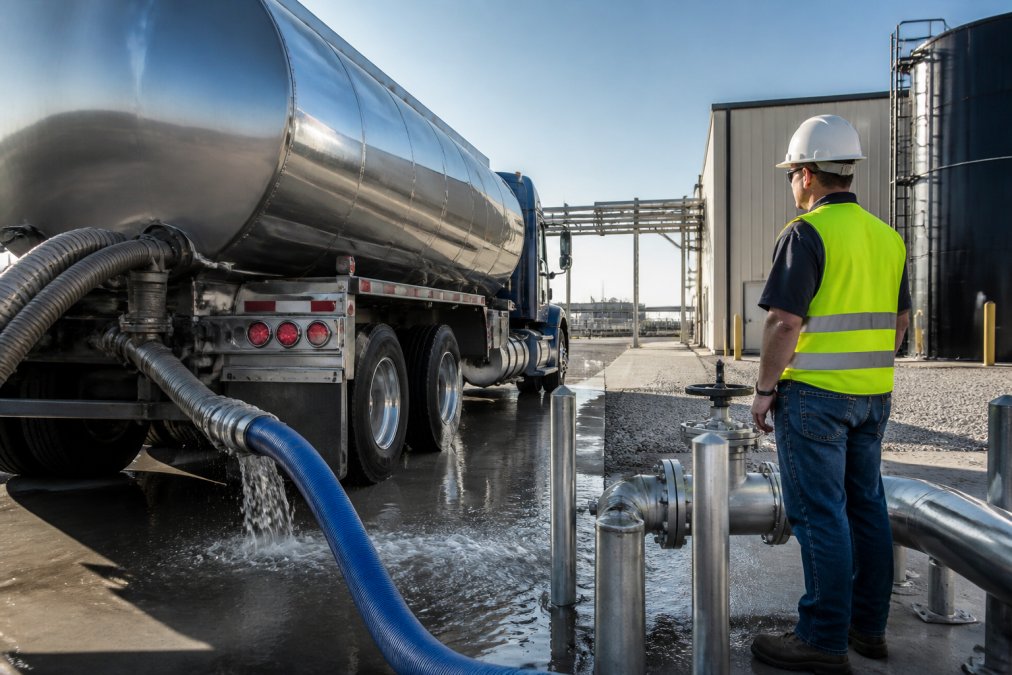
Data centers are among the most water-intensive industrial operations, using water for cooling and facility maintenance around the clock. High-volume water procurement for data centers comes down to one question: can your supplier meet peak summer demand without interruption?
Frequently Asked Questions
What are the primary industrial water supply challenges in Texas?
Texas industrial operations face water scarcity, aging infrastructure, and increasing regulatory pressure on discharge and consumption. Drought conditions strain municipal supplies, pushing facilities toward alternative sources like bulk water pickup, on-site treatment, and water reuse. Data centers, manufacturing plants, and construction sites need consistent volume and quality, which municipal systems cannot always guarantee during peak demand. Many operations now build redundancy into their industrial water supply strategy to avoid downtime.
How do data centers manage high-volume water requirements?
Data centers rely on water for cooling towers and facility maintenance, often consuming thousands of gallons daily. Many use a mix of municipal supply, on-site treatment, and bulk water pickup to maintain redundancy. High-volume water procurement for data centers typically involves contracts with bulk suppliers who can guarantee consistent volume, especially during summer peaks. Some facilities also invest in water recycling systems to reduce total draw and improve cooling tower efficiency.
What is the difference between municipal and industrial bulk water supply?
Municipal supply delivers treated water through a piped distribution network, with volume and pressure subject to city capacity and peak demand. Industrial bulk water supply involves purchasing large volumes directly from a supplier, often via pickup or dedicated delivery, giving facilities more control over scheduling and volume. Bulk supply suits operations that need guaranteed quantities, specific water quality like alkaline water, or a backup source when municipal systems are strained.
How can industrial sites ensure water quality for cooling and manufacturing?
Regular water quality monitoring is essential. Facilities should test for pH, hardness, conductivity, and contaminants that affect equipment. Tools like Hach instrumentation provide real-time data and support regulatory reporting. For cooling systems, maintaining proper water chemistry prevents scale and corrosion. Many sites also work with bulk suppliers who provide water quality certificates and testing documentation to verify the water meets their specifications.
What are the benefits of local bulk water pickup for construction projects?
Local bulk water pickup eliminates delivery delays and gives construction managers direct control over scheduling. Crews can collect water when needed rather than waiting for a delivery window. This is especially valuable in remote areas where delivery infrastructure is limited. Pickup also reduces cost per gallon for high-volume users and ensures a consistent supply for crew hydration, dust control, and equipment maintenance. A local Texas source shortens turnaround time significantly.
Industrial water supply in Texas rewards operators who plan for scarcity before it arrives. Our True North, LLC built its pickup model around exactly that problem, with high-volume alkaline water, consistent quality, and a flexible schedule that keeps your operation running without waiting on a delivery truck. Get a free estimate and see what reliable, local supply looks like for your site.