 listicle
Benefits of Pickup Water Logistics for Industrial Ops
Table of Contents
- Why Pickup Water Logistics Outperforms Traditional Delivery Models
- Bulk Water Pickup vs Delivery: Cost, Control, and Reliability
- Data Center Cooling Water Requirements and Why Supply Consistency Matters
- Industries That Gain the Most from Pickup Water Logistics
- Water Logistics Efficiency Strategies for High-Volume Operations
- Safety, Quality Standards, and Regulatory Compliance
- Sustainability and Environmental Impact of Pickup-Based Water Supply
- Frequently Asked Questions
Last Updated: August 30, 2026
Why Pickup Water Logistics Outperforms Traditional Delivery Models
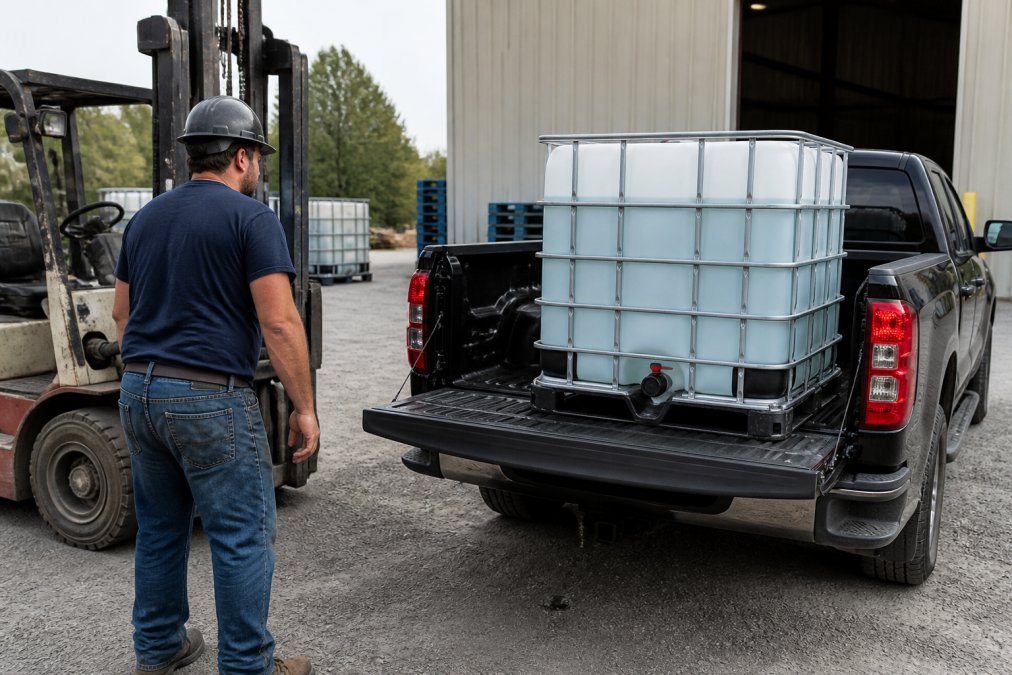
Pickup water logistics is a supply model in which industrial and commercial operations transport bulk water from a fixed source on their own schedule, rather than waiting for a supplier's delivery window. For high-volume users, this distinction is the difference between controlling your supply chain and being controlled by someone else's.
At Our True North, LLC, we work directly with operations managers, procurement officers, and facility teams who have learned this lesson the hard way. A missed delivery window during a Texas summer can halt construction hydration, knock a data center cooling system into emergency mode, or leave a fire department short on reserve capacity. The pickup model eliminates that single point of failure.
The core advantage is schedule independence. Delivery-based models require coordination between your timeline and a carrier's route planning, which introduces variability. Pickup operations give you a fixed, known source you can access when your operation demands it.
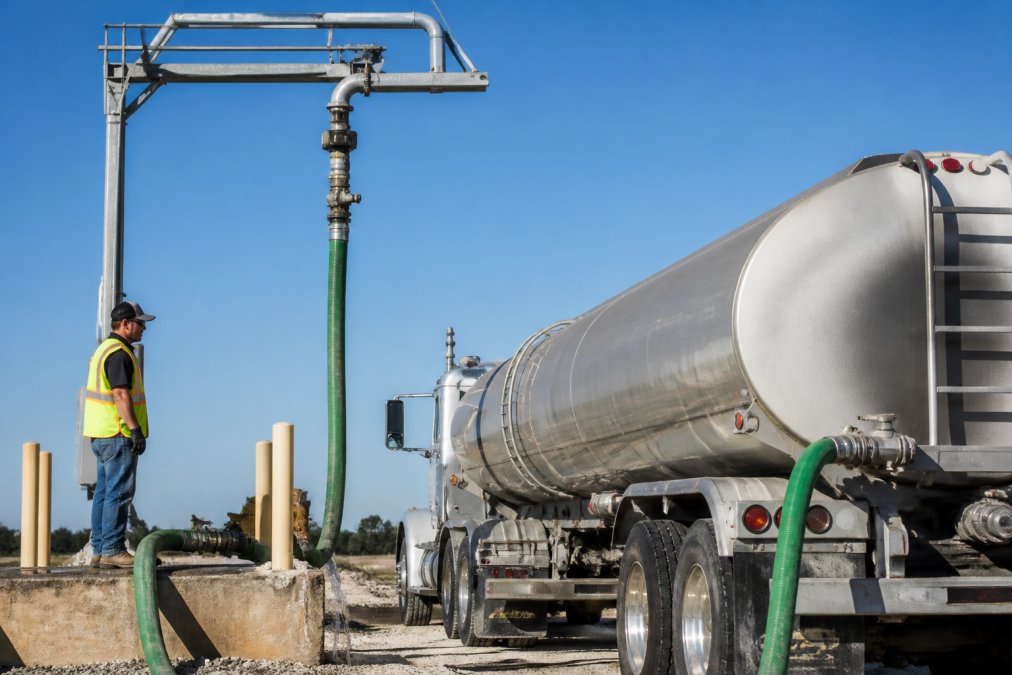
Operational efficiency gains compound over time. Teams that manage their own pickup cadence report fewer supply disruptions, better alignment between water inventory and actual consumption, and reduced dependency on third-party logistics coordination. For operations running 24/7, that consistency is a baseline requirement. The pickup model also supports stronger financial visibility, no surprise surcharges for emergency deliveries, no fuel adjustment fees, and no premium charges for same-day fulfillment.
Bulk Water Pickup vs Delivery: Cost, Control, and Reliability
Most operations default to delivery because it feels simpler. The problem is that "simpler" and "more reliable" are not the same thing.
Delivery-based bulk water logistics depends on carrier availability, route density, and weather conditions. Inclement weather, road closures, or high-demand periods, particularly peak summer months in Texas, can delay or cancel scheduled deliveries with limited notice. For operations with tight water consumption windows, that uncertainty carries real operational risk.
Pickup-based models transfer that risk away from external logistics and into your own fleet management. If you have the transport capacity, you have the supply. You absorb the transportation cost and coordination responsibility, but you gain direct control over timing and volume.
Pros and Cons of Each Approach
| Factor | Pickup Model | Delivery Model |
|---|---|---|
| Schedule control | Full control, your timeline | Dependent on supplier routes |
| Supply reliability | High, if transport is available | Variable, weather and demand sensitive |
| Cost predictability | High, fixed per-volume pricing | Variable, surcharges possible |
| Volume flexibility | Fill to your tank capacity | Constrained by delivery batch sizes |
| Emergency access | Immediate if source is open | Subject to carrier availability |
| Logistical complexity | Requires your own transport | Managed by supplier |
For high-volume industrial operations where supply consistency is non-negotiable, the pickup model provides a structural reliability advantage that delivery cannot match.
Data Center Cooling Water Requirements and Why Supply Consistency Matters
Data center cooling water requirements are among the most demanding in any industrial category. Cooling systems consume water continuously, and any interruption creates immediate thermal management risk.
A data center running at full capacity cannot tolerate an ad hoc approach to water procurement. Cooling systems need consistent, predictable supply of clean water meeting quality specifications. Alkaline water is preferred in many facilities because it reduces scaling and corrosion in cooling infrastructure, extending equipment lifecycle and reducing maintenance frequency.
Peak summer temperatures in Texas drive cooling loads significantly higher, which means water consumption increases precisely when delivery logistics are most strained. A pickup-based supply model addresses this directly. By maintaining on-site storage capacity and scheduling regular pickups from a reliable source, data center operators can buffer against demand spikes without depending on a supplier's ability to scale delivery logistics on short notice.
According to the U.S. Department of Energy's guidance on data center energy and water efficiency, water usage effectiveness is an increasingly scrutinized metric for data center operations, and supply consistency directly affects both operational uptime and sustainability reporting.
Industries That Gain the Most from Pickup Water Logistics
Pickup water logistics delivers the greatest operational value in industries where water is a critical input, volume requirements are high, and supply interruptions carry immediate consequences.

Construction Sites and Crew Hydration
Construction operations have two distinct water needs: crew hydration and site water management. Both are non-negotiable.
Crew hydration requirements scale with site size and ambient temperature. On a Texas worksite in July, the OSHA heat illness prevention standards establish clear expectations for water availability. Meeting that standard requires a reliable, high-volume water source that does not depend on a delivery schedule aligned to someone else's route.
Site water management is equally demanding. Dust control on active construction sites requires bulk water application to suppress particulate matter and maintain air quality standards. Soil compaction for foundation and roadbed work requires consistent moisture levels that cannot be achieved with intermittent supply. Pickup logistics allow site managers to fill tankers on their schedule and apply water precisely when site conditions require it.
Fire Departments and Emergency Response
Fire departments face a supply challenge that is genuinely unique: they need water available immediately, in large quantities, at unpredictable times. Delivery-based procurement cannot serve that need.
The pickup model works differently for fire departments than for other industrial users. Rather than scheduling pickups to meet ongoing consumption, fire departments use pickup logistics to pre-position water reserves, filling tankers and on-site storage ahead of periods when demand is expected to be high, such as during drought conditions or elevated fire risk seasons.
Bulk alkaline water is also used for equipment maintenance and testing. Regular apparatus testing, pump certification, and hose maintenance all require clean water in volume. Having a reliable pickup source eliminates scheduling friction around operational readiness requirements.
Industrial Manufacturing and Dust Control
Manufacturing facilities use water across a range of processes: equipment cooling, dust suppression on production floors, parts washing, and humidity control in climate-sensitive production environments.
Dust control in manufacturing is particularly critical. Fine particulate matter generated by cutting, grinding, or material handling operations poses both safety and regulatory compliance risks. Water-based dust suppression requires a steady supply that can be scaled to production volume. When production ramps up, water demand increases with it. The pickup model provides direct control over that supply relationship without carrier negotiation or delivery window management.
Water Logistics Efficiency Strategies for High-Volume Operations
Operational efficiency in water logistics comes down to three variables: source reliability, transport capacity, and storage infrastructure.
Source reliability is the foundation. A pickup model is only as efficient as the source it draws from. Operations should establish a primary source with documented water quality testing, clear volume availability commitments, and a track record of consistent supply.
Transport capacity determines how frequently pickups are needed. Operations that invest in adequate tanker capacity can reduce pickup frequency while maintaining buffer inventory on site. The goal is to avoid running low between pickups, particularly during high-demand periods.
Storage infrastructure is the efficiency multiplier. On-site storage tanks, sized to your peak consumption requirements, allow operations to decouple pickup scheduling from daily water consumption.
Operations that track water consumption by shift or process can identify inefficiencies and right-size their pickup frequency accordingly. Digital tracking tools that log fill volumes, consumption rates, and pickup timestamps give operations managers the financial visibility to optimize procurement cost without compromising supply reliability.
| Strategy | Primary Benefit | Implementation Complexity |
|---|---|---|
| Dedicated tanker capacity | Eliminates third-party transport dependency | Medium |
| On-site storage buffer (3+ days) | Absorbs demand spikes and pickup delays | Low to medium |
| Consumption tracking by process | Identifies waste and right-sizes procurement | Low |
| Scheduled pickup cadence | Predictable cost and supply | Low |
| Backup source identification | Protects against primary source disruption | Low |
Safety, Quality Standards, and Regulatory Compliance
Water quality for industrial applications is not a preference, it is a compliance requirement. The specific standards vary by application, but the underlying principle is consistent: water used in industrial processes must meet documented quality specifications.
For potable water used in crew hydration, the EPA Safe Drinking Water Act standards establish the baseline quality requirements. Operations supplying drinking water to crews must be able to demonstrate that the water source meets these standards.
For equipment applications like cooling systems, dust suppression, and parts washing, relevant standards depend on equipment manufacturer specifications and applicable industry regulations. Alkaline water is often specified for cooling applications because it reduces corrosive mineral buildup in system components.
Safety protocols for water pickup operations also matter. Workers filling tankers at bulk water stations should follow established procedures for hose connection, fill rate management, and overflow prevention. Spill containment, proper PPE, and clear communication between fill station operators and transport crews are baseline requirements.
An operation that cannot verify its water source's quality is exposed to equipment damage claims, regulatory penalties, and crew health liability. Quality documentation is operational risk management.
Sustainability and Environmental Impact of Pickup-Based Water Supply
Pickup-based water logistics carries a sustainability profile that delivery models often cannot match.
Delivery logistics require a carrier to route a vehicle to your location, often as one stop among many, with associated empty-mile inefficiencies. When your operation sends a dedicated tanker to a fixed pickup point, the transport is purposeful and direct. Fewer vehicle movements per volume unit delivered translates to lower fuel consumption and a reduced carbon footprint per gallon of water procured.
According to the EPA's SmartWay Transport Partnership program, freight transportation is a significant source of greenhouse gas emissions, and route efficiency is one of the most effective levers for reducing that impact. Pickup models, by their nature, are more route-efficient than multi-stop delivery logistics.
Water source proximity also matters for sustainability metrics. Sourcing from a local provider reduces transport distance, which directly reduces fuel consumption and emissions per delivery. For operations that report on carbon footprint or participate in sustainability certification programs, this is a measurable, documentable advantage.
Operations that manage their own pickup cadence tend to be more precise about volume procurement, filling to their storage capacity rather than accepting whatever batch size a delivery schedule dictates. This precision reduces waste and supports more responsible water use, increasingly relevant in drought-prone regions where water resource management is a regulatory and community concern.
Our True North, LLC's pickup model supports this directly: a fixed, local source with consistent quality means your procurement documentation is straightforward, your transport footprint is minimal, and your supply chain is transparent from source to storage.
Reliable water supply is the operational baseline that high-volume industrial operations cannot afford to get wrong. Our True North, LLC provides high-volume alkaline water through a straightforward pickup process designed to eliminate delivery delays and give your operation direct control over its water supply. With consistent water quality, flexible pickup scheduling, and the volume capacity to serve data centers, construction sites, manufacturing facilities, and fire departments, we are built for the operations that cannot afford to improvise. Contact Our True North, LLC for a free estimate on your water procurement requirements.
Frequently Asked Questions
How does a pickup model eliminate common water delivery delays?
Delivery schedules depend on driver availability, route logistics, fuel costs, and weather. Any disruption in that chain can leave your operation short. With a pickup model, you control the timing. You arrive when your schedule demands it, load your volume, and return to site without waiting on a third-party driver. For operations running 24/7 or managing unpredictable demand spikes, that scheduling control directly reduces downtime risk.
Why is high-volume alkaline water preferred for data center cooling?
Data center cooling systems, especially evaporative and closed-loop systems, are sensitive to mineral content and pH levels. Water that is too acidic accelerates corrosion in pipes, heat exchangers, and cooling towers. Alkaline water with a stable pH reduces scale buildup and equipment wear. For facilities running continuous cooling loads, consistent water quality is as critical as consistent supply volume. A single batch of inconsistent water can affect system performance and trigger maintenance cycles.
What industries benefit most from dedicated water pickup logistics?
Data centers, construction sites, industrial manufacturing facilities, and fire departments see the clearest operational benefits from pickup water logistics. Each relies on high-volume, consistent water access where delivery delays create real operational risk. Construction crews need hydration and dust control on-demand. Fire departments require large quantities available outside normal procurement windows. Data centers need chemically stable water without gaps in supply. Pickup logistics serves all of these by removing the scheduling dependency on a delivery provider.
What are the cost benefits of managing your own water pickup?
Pricing for pickup-based water supply depends on volume, frequency, and water type, so contact your provider directly for current rates. That said, the operational savings come from eliminating delivery surcharges, reducing emergency procurement costs during supply gaps, and cutting administrative overhead tied to managing multiple delivery vendors. Operations that standardize on a single reliable pickup source typically spend less time managing logistics exceptions and more time on core work.
This article was written using GrandRanker
Frequently Asked Questions
How does a pickup model eliminate common water delivery delays?
Delivery schedules depend on driver availability, route logistics, fuel costs, and weather. Any disruption in that chain can leave your operation short. With a pickup model, you control the timing. You arrive when your schedule demands it, load your volume, and return to site without waiting on a third-party driver. For operations running 24/7 or managing unpredictable demand spikes, that scheduling control directly reduces downtime risk.
Why is high-volume alkaline water preferred for data center cooling?
Data center cooling systems, especially evaporative and closed-loop systems, are sensitive to mineral content and pH levels. Water that is too acidic accelerates corrosion in pipes, heat exchangers, and cooling towers. Alkaline water with a stable pH reduces scale buildup and equipment wear. For facilities running continuous cooling loads, consistent water quality is as critical as consistent supply volume. A single batch of inconsistent water can affect system performance and trigger maintenance cycles.
What industries benefit most from dedicated water pickup logistics?
Data centers, construction sites, industrial manufacturing facilities, and fire departments see the clearest operational benefits from pickup water logistics. Each relies on high-volume, consistent water access where delivery delays create real operational risk. Construction crews need hydration and dust control on-demand. Fire departments require large quantities available outside normal procurement windows. Data centers need chemically stable water without gaps in supply. Pickup logistics serves all of these by removing the scheduling dependency on a delivery provider.
What are the cost benefits of managing your own water pickup?
Pricing for pickup-based water supply depends on volume, frequency, and water type, so contact your provider directly for current rates. That said, the operational savings come from eliminating delivery surcharges, reducing emergency procurement costs during supply gaps, and cutting administrative overhead tied to managing multiple delivery vendors. Operations that standardize on a single reliable pickup source typically spend less time managing logistics exceptions and more time on core work.