 listicle
Bulk Water Supply for Manufacturing: 2026 Guide
Table of Contents
- What Manufacturing Operations Need from a Bulk Water Supply
- High-Volume Alkaline Water for Manufacturing: Key Applications
- Bulk Water Pickup vs. Delivery: Which Model Works Best?
- Industrial Bulk Water Delivery Cost: What Drives Your Price
- Water Quality Standards and Compliance for Manufacturing
- How to Choose a Reliable Bulk Water Supply Partner
- Conclusion
Last Updated: August 28, 2026
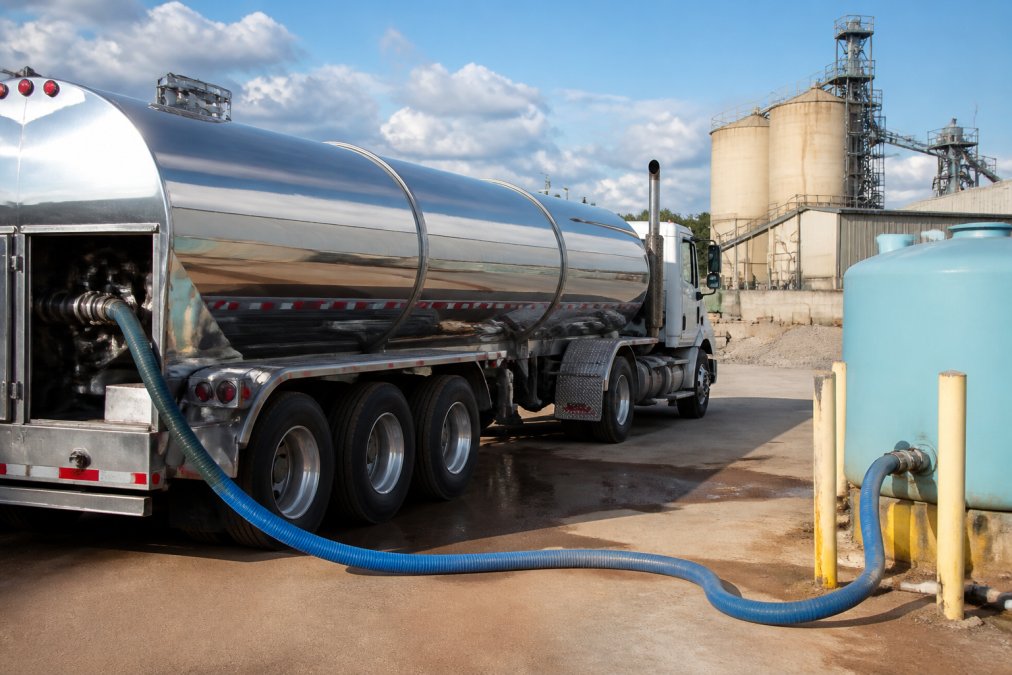
Manufacturing operations run on water. Cooling systems, chemical blending lines, pharmaceutical cleanrooms, and construction crews all depend on a consistent, high-purity supply, and when that supply falters, production stops. At Our True North, LLC, we work directly with operations managers and procurement officers who've learned the hard way that bulk water supply for manufacturing isn't a commodity decision. It's a reliability decision. Below, we break down exactly what you need to know: water types, delivery models, cost drivers, compliance requirements, and how to choose a supplier that won't leave you scrambling.
Quick Picks:
- Best for high-volume alkaline water pickup: Our True North, LLC, flexible schedule, no delivery delays, consistent quality
- Best for naturally sourced spring water delivery: Samantha Springs, 6,250-gallon tanker loads, FDA and TCEQ certified
- Best for mixed potable/non-potable needs: Foster Fuels, NSF-certified trailers, serves construction and industrial sectors
| Water Type | Primary Use | Key Spec | Typical Delivery Format |
|---|---|---|---|
| Alkaline water | Cooling, crew hydration, general ops | Elevated pH | Tanker, bulk pickup |
| Distilled water | Pharmaceutical, lab, battery ops | Near-zero TDS | Drums, totes, tanker |
| Deionized water | Chemical blending, electronics mfg | Resistivity-based | Totes, tanker |
| Reverse osmosis | Food & beverage, general industrial | Low TDS, filtered | Tanker, onsite system |
| Potable spring water | Food production, bottling | FDA-compliant | 6,250-gal tanker loads |
What Manufacturing Operations Need from a Bulk Water Supply
Bulk water supply for manufacturing is the procurement of large-volume water delivered or picked up in tanker quantities that meets the purity, flow rate, and consistency requirements of industrial processes. Using the wrong specification can damage equipment, contaminate product batches, or trigger compliance failures.
Most facilities must answer three questions: What purity level does my process require? What volume do I need per day or per week? Can my supplier maintain that output without interruption? The answers determine water type, supplier model, storage infrastructure, and contingency planning.
Distilled, Deionized, and Reverse Osmosis Water
Distilled water is produced by boiling water and collecting condensed steam, removing minerals, bacteria, and most contaminants. It's the standard for pharmaceutical manufacturing, laboratory reagent preparation, and battery electrolyte production.
Deionized water passes through ion-exchange resins that strip dissolved ionic solids, producing water measured by electrical resistivity. Electronics manufacturing, chemical blending, and semiconductor fabrication specify DI water because trace ions can compromise product integrity. DI water is reactive and will absorb CO2 from air and leach ions from standard metal piping, so storage tanks and transfer lines must use compatible materials like polypropylene or stainless steel with passivated surfaces.
Reverse osmosis water forces water through a semi-permeable membrane under pressure, removing contaminants including bacteria, heavy metals, and dissolved solids. RO is widely used in food and beverage production and as a pre-treatment stage before deionization or distillation.
High-Purity Water for Pharmaceutical and Chemical Applications
Pharmaceutical-grade water sits at the top of the purity pyramid. The FDA guidance on water for pharmaceutical use distinguishes between Purified Water, Water for Injection, and other compendial grades, each with specific conductivity, TOC, and microbial limits that a bulk supplier must document.
Chemical blending operations have similar demands. Inconsistent mineral content in water can shift pH, alter reaction rates, or produce off-spec product. Procurement officers should require a Certificate of Analysis with every delivery, not just periodic testing. Tanker trucks used for pharmaceutical-grade water must be dedicated to that use, regularly sanitized, and constructed from food-grade stainless steel.
High-Volume Alkaline Water for Manufacturing: Key Applications
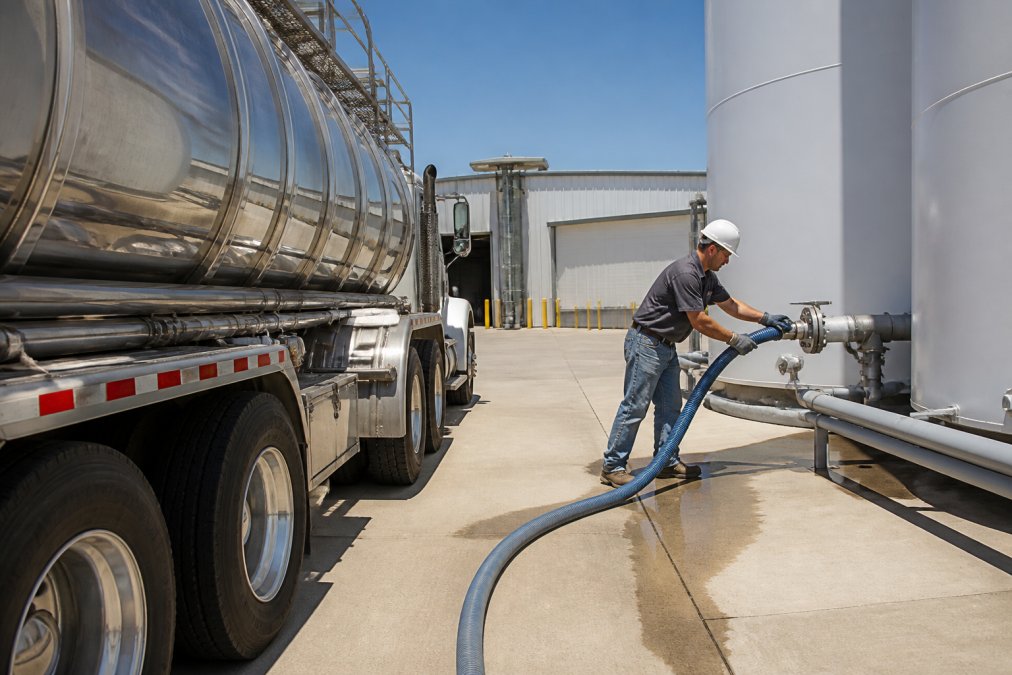
High-volume alkaline water, characterized by a pH above 7 (typically 8-9), is used where neutral or slightly basic chemistry is preferred for equipment longevity, crew hydration, and process stability. Our True North, LLC supplies high-volume alkaline water with a pickup model that eliminates scheduling uncertainty from third-party delivery fleets.
Data Centers and Cooling Systems
Data centers are among the most water-intensive industrial facilities. Cooling towers, evaporative coolers, and chiller systems consume substantial daily volumes, and water quality directly affects equipment lifespan. Mineral-laden water causes scale buildup in heat exchangers; corrosive water accelerates metal degradation. Stable, slightly alkaline pH reduces corrosion rates in copper and steel cooling circuits. Operations running 24/7 need a supply chain matching that uptime. A single missed delivery can force a cooling system onto backup capacity, increasing energy costs and thermal risk. Peak summer demand often coincides with peak municipal water stress, so a dedicated bulk supply agreement insulates you from municipal pressure fluctuations when most vulnerable.
Construction Sites and Fire Departments
Construction crews need potable water for hydration and non-potable water for dust control, concrete mixing, equipment cooling, and site washdown. Large commercial sites routinely need thousands of gallons per day. Fire departments need immediate access to large water volumes for emergency response. According to the National Fire Protection Association standards for water supply, adequate water supply for fire suppression is a fundamental planning requirement for both municipal and industrial fire protection systems.
Bulk Water Pickup vs. Delivery: Which Model Works Best?
The pickup model is better for operations with predictable schedules and transport capacity. The delivery model suits facilities lacking transport assets but tolerating scheduling constraints.
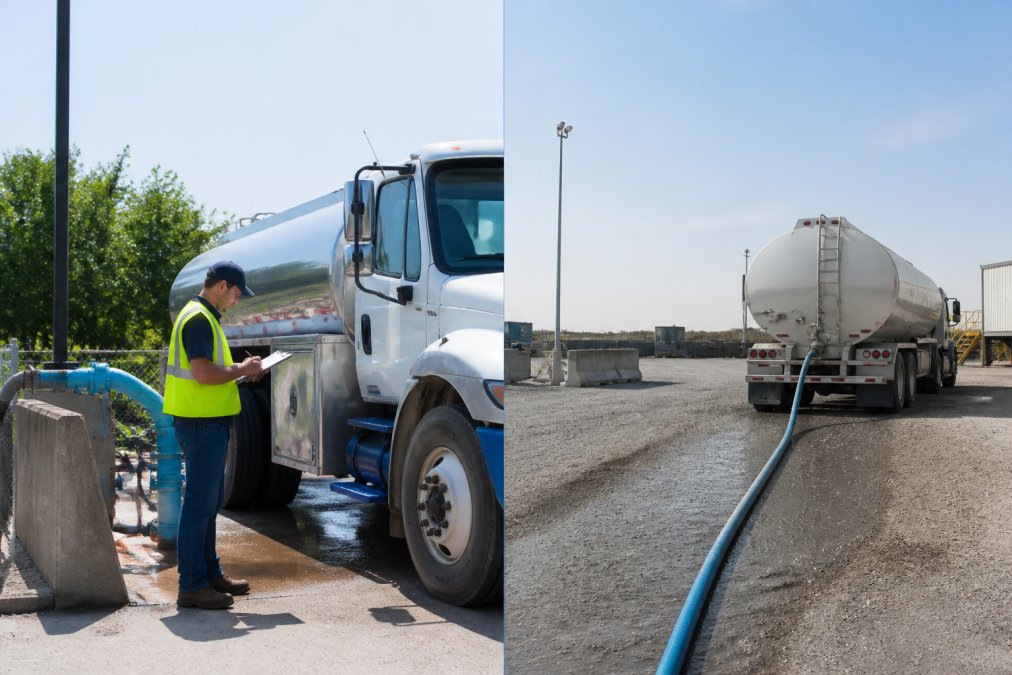
Most procurement decisions default to delivery because it feels lower-effort. But delivery schedules are controlled by the supplier, not you, and when demand spikes regionally, your slot gets deprioritized. The pickup model flips that dynamic: you collect when needed, in the volume needed, without waiting for driver availability. For operations with owned or leased tanker capacity, this translates directly into supply chain control.
| Factor | Pickup Model | Delivery Model |
|---|---|---|
| Schedule control | Buyer controls timing | Supplier controls timing |
| Surge demand | Collect on demand | Subject to fleet availability |
| Transport cost | Buyer absorbs | Included in price (often marked up) |
| Best for | Facilities with tanker assets | Facilities without transport |
| Reliability risk | Lower (self-directed) | Higher (third-party dependency) |
Pickup requires slightly more work, but that work is predictable and within your control. Delivery failures are unpredictable and outside it. For critical operations, that tradeoff is straightforward.
Industrial Bulk Water Delivery Cost: What Drives Your Price
Industrial bulk water delivery cost varies significantly based on water type, volume, transport distance, and market conditions. No supplier should quote a flat rate without knowing your specifications.
Primary cost drivers for bulk water supply:
- Water type and purity level, Distilled and deionized water require more processing than alkaline or potable water.
- Volume per order, Larger orders reduce per-gallon cost; most suppliers price in tanker-load increments.
- Transport distance, Delivery pricing scales with distance; pickup eliminates this variable.
- Frequency and contract terms, Spot orders cost more than scheduled contract supply.
- Container and equipment requirements, Specialized stainless steel tankers add cost.
- Testing and documentation, Certificates of Analysis and compliance documentation carry administrative cost.
For the pickup model, your cost structure is simpler: you pay for water and absorb your own transport overhead. That transparency makes budget forecasting easier than managing variable delivery invoices.
Contact Our True North, LLC directly for a quote; pricing is based on your volume requirements and pickup schedule, and a free estimate is available without commitment.
Water Quality Standards and Compliance for Manufacturing
Water quality compliance for manufacturing is governed by layered federal and state standards that vary by application. Getting this wrong risks product quality, triggers regulatory action, voids equipment warranties, or causes facility shutdown.
The EPA drinking water standards and regulations establish maximum contaminant levels for potable water, but industrial process water often requires specifications beyond federal minimums. Pharmaceutical water is governed by United States Pharmacopeia standards. Food and beverage production falls under FDA jurisdiction. Cooling tower water chemistry is regulated at the state level in many jurisdictions.
Key compliance checkpoints:
- Request a Certificate of Analysis (CoA) for every tanker load, not just periodic batches
- Verify supplier testing protocols, who conducts testing, how frequently, and against which standard
- Confirm equipment certification, NSF/ANSI certification for potable water contact surfaces is baseline for food and beverage applications
- Document chain of custody from source to point of use, particularly for pharmaceutical-grade water
- Understand your state's water quality regulations, the Texas Commission on Environmental Quality sets standards for water supply in Texas that may apply to your operation
Treat water compliance as an ongoing audit process, not a one-time vendor qualification.
How to Choose a Reliable Bulk Water Supply Partner
Choosing a reliable bulk water supply partner comes down to five criteria: water quality documentation, volume capacity, supply consistency, geographic proximity, and contingency capability.
- Water quality documentation, Ask for a sample CoA before committing. Hesitation is telling.
- Volume capacity, Confirm the supplier can meet your peak demand, not just average demand.
- Supply consistency, Ask how they handle high-demand periods. Do they have reserve capacity? What's their lead time for surge orders?
- Geographic proximity, Closer suppliers mean shorter transport times, lower pickup costs, and faster emergency response.
- Contingency capability, What happens if their primary source is temporarily offline? Do they have backup supply agreements or secondary production capacity?
As documented in EPA water infrastructure resilience resources, supply chain resilience for water-dependent operations requires planning beyond the primary supplier relationship.
Onsite Storage and Infrastructure Integration
Onsite storage is the buffer between your supply chain and operation. Most manufacturing facilities maintain storage tanks sized to cover at least 48-72 hours of operational demand, enough to absorb a delayed pickup or delivery without disrupting production.
Storage tank selection depends on water type. Alkaline and potable water can use food-grade polyethylene or fiberglass tanks. Deionized water requires non-reactive materials like polypropylene or stainless steel with appropriate surface treatment.
Infrastructure integration checklist:
- Verify tank material compatibility with your water type and pH
- Install dedicated fill connections with appropriate backflow prevention
- Size storage capacity to cover your maximum operational window between supply events
- Establish a tank inspection and cleaning schedule (quarterly is common)
- Confirm flow rate from storage to point of use meets your process requirements
Contingency Planning for Supply Disruptions
Supply disruptions happen. Equipment failures, weather events, transportation constraints, and regional demand spikes can all interrupt your primary water supply. Facilities that handle these events without production impact planned for them before disruption occurred.
A practical contingency framework:
- Identify your minimum viable supply, What's the minimum volume per day that keeps critical processes running?
- Establish a secondary supplier relationship, Qualify a backup supplier before you need one.
- Size your storage for disruption coverage, If your primary supply has a realistic worst-case disruption window of 72 hours, your storage should cover at least that.
- Document escalation protocols, Who authorizes emergency water procurement? How quickly can that decision be made?
- Test your contingency plan annually, Run a tabletop exercise simulating primary supply failure.
The FEMA water supply planning guidance for critical facilities recommends that facilities with water-dependent critical operations maintain documented continuity plans including minimum supply thresholds and alternate source identification.
Manufacturing operations can't afford to treat water procurement as an afterthought. The wrong supplier, wrong water grade, or a single supply gap can halt production, damage equipment, or trigger compliance events. Our True North, LLC provides high-volume alkaline water with a flexible pickup model that gives operations teams direct control over their supply schedule, no waiting on a delivery fleet, no surprise shortfalls during peak demand. Get a free estimate from Our True North, LLC and establish a supply relationship built around your operational requirements, not a supplier's routing schedule.
Frequently Asked Questions
How much does industrial bulk water delivery cost per 1,000 gallons?
Bulk water pricing depends on several factors: water type (potable, alkaline, deionized, or distilled), total volume per order, distance from the source, and whether you are using a delivery or pickup model. Pickup-based models typically cost less because you eliminate transportation fees. For an accurate figure specific to your volume and water type, contact your supplier directly for a quote rather than relying on generic estimates.
What quality standards should manufacturing water meet?
The standard depends on the application. Potable water must meet EPA Safe Drinking Water Act requirements. Pharmaceutical-grade water follows USP purified water specifications. Deionized and distilled water used in chemical blending or electronics manufacturing typically requires resistivity and conductivity testing to confirm contaminant removal. Ask any bulk water supply partner for documentation of their testing protocols and current water quality reports before committing to a supply agreement.
What are the benefits of alkaline water in manufacturing applications?
Alkaline water has a pH above 7, which can reduce corrosion in certain cooling and process water systems. For crew hydration on construction sites or in data centers, some operators prefer alkaline water for its mineral content and palatability. In food and beverage production, the pH profile of process water can affect product consistency. Confirm that the specific pH range meets your equipment manufacturer's specifications before switching your water source.
How does a pickup-based water supply model improve project efficiency?
Delivery schedules depend on a supplier's fleet availability, driver hours, and route priorities, all of which can shift during peak demand periods. A pickup model puts your team in control of the timeline. You arrive with your tanker when your operation needs water, load on your schedule, and return to site without waiting for a delivery window. For 24/7 operations like data centers or active construction sites, that scheduling control directly reduces downtime risk.
How do you calculate the volume of bulk water needed for industrial processes?
Start with your daily process flow rate requirements, measured in gallons per hour or gallons per shift. Multiply by your operating hours and add a buffer of 15 to 20 percent for equipment flushing, testing draws, and unexpected demand spikes. Factor in your onsite storage tank capacity so you know the maximum volume you can accept per fill. Share those numbers with your bulk water supply partner so they can confirm they can meet your volume consistently, including during peak summer months.
This article was written using GrandRanker
Frequently Asked Questions
How much does industrial bulk water delivery cost per 1,000 gallons?
Bulk water pricing depends on several factors: water type (potable, alkaline, deionized, or distilled), total volume per order, distance from the source, and whether you are using a delivery or pickup model. Pickup-based models typically cost less because you eliminate transportation fees. For an accurate figure specific to your volume and water type, contact your supplier directly for a quote rather than relying on generic estimates.
What quality standards should manufacturing water meet?
The standard depends on the application. Potable water must meet EPA Safe Drinking Water Act requirements. Pharmaceutical-grade water follows USP purified water specifications. Deionized and distilled water used in chemical blending or electronics manufacturing typically requires resistivity and conductivity testing to confirm contaminant removal. Ask any bulk water supply partner for documentation of their testing protocols and current water quality reports before committing to a supply agreement.
What are the benefits of alkaline water in manufacturing applications?
Alkaline water has a pH above 7, which can reduce corrosion in certain cooling and process water systems. For crew hydration on construction sites or in data centers, some operators prefer alkaline water for its mineral content and palatability. In food and beverage production, the pH profile of process water can affect product consistency. Confirm that the specific pH range meets your equipment manufacturer's specifications before switching your water source.
How does a pickup-based water supply model improve project efficiency?
Delivery schedules depend on a supplier's fleet availability, driver hours, and route priorities, all of which can shift during peak demand periods. A pickup model puts your team in control of the timeline. You arrive with your tanker when your operation needs water, load on your schedule, and return to site without waiting for a delivery window. For 24/7 operations like data centers or active construction sites, that scheduling control directly reduces downtime risk.
How do you calculate the volume of bulk water needed for industrial processes?
Start with your daily process flow rate requirements, measured in gallons per hour or gallons per shift. Multiply by your operating hours and add a buffer of 15 to 20 percent for equipment flushing, testing draws, and unexpected demand spikes. Factor in your onsite storage tank capacity so you know the maximum volume you can accept per fill. Share those numbers with your bulk water supply partner so they can confirm they can meet your volume consistently, including during peak summer months.