 ultimate-guide
Industrial Alkaline Water Testing Requirements: A 2026 Guide
Table of Contents
- Why Industrial Alkaline Water Testing Requirements Matter for Operations
- Understanding pH Level and Total Alkalinity in Industrial Water
- EPA Water Testing Requirements for Industrial Facilities
- Industrial Water pH Testing Methods and Frequency
- Equipment Protection and Corrosion Prevention Through Testing
- Testing Alkaline Water for Your Industrial Operations
- Frequently Asked Questions
Last Updated: September 1, 2026
Why Industrial Alkaline Water Testing Requirements Matter for Operations
Industrial alkaline water testing requirements aren't optional compliance checkboxes. They're the difference between equipment that lasts decades and systems that corrode, scale, and fail unexpectedly. Water quality directly impacts your bottom line, alkaline water with improper pH or total alkalinity levels damages cooling systems, clogs distribution lines, and forces expensive emergency maintenance. The cost of one unplanned shutdown often exceeds months of proper testing.
Beyond equipment protection, regulatory compliance keeps your facility operating legally. Federal and state agencies mandate specific testing protocols for industrial discharge, and failing to meet them exposes your operation to fines, shutdowns, and reputational damage.
At Our True North, LLC, we work with high-volume water users across Texas who understand this reality. This guide covers everything you need to know about alkaline water testing requirements, from understanding pH and alkalinity fundamentals to implementing a testing schedule that protects your systems and keeps your operation running smoothly.
Understanding pH Level and Total Alkalinity in Industrial Water
The pH Scale Explained
The pH scale measures how acidic or alkaline water is, ranging from 0 to 14. A pH of 7 is neutral; values below 7 are acidic, and values above 7 are alkaline. Industrial operations typically require pH between 6.5 and 8.5, depending on the application and equipment materials (the EPA).
Water with pH below 6.5 becomes corrosive to metal pipes and cooling systems. Water above 8.5 promotes scale formation and reduces the effectiveness of chemical treatment programs. The pH scale is logarithmic, meaning a one-point change represents a tenfold difference in acidity or alkalinity. This is why precise pH measurement and control matter so much in industrial settings.
Difference Between pH and Alkalinity
pH measures the concentration of hydrogen ions right now, a snapshot of acidity or alkalinity at a single moment. Alkalinity measures the water's ability to resist pH changes. It's the buffering capacity of your water.
High alkalinity means your water can absorb acids or bases without a dramatic pH swing. Low alkalinity means pH can shift rapidly with small chemical additions. Industrial systems need both appropriate pH and sufficient alkalinity to stay stable. You can have high pH with low alkalinity (unstable), or neutral pH with high alkalinity (stable).
For industrial discharge and cooling systems, maintaining total alkalinity between 80-120 mg/L (milligrams per liter) provides adequate buffering while preventing scale formation (the EPA). The relationship between pH and alkalinity determines whether your water treatment program actually works.
EPA Water Testing Requirements for Industrial Facilities
Regulatory Standards and Compliance
The EPA establishes baseline water quality standards under the Clean Water Act, and industrial facilities must comply with these requirements for any water discharge. Industrial discharge permits (typically issued as NPDES permits, National Pollutant Discharge Elimination System) specify exactly which parameters you must test, how often you must test them, and what acceptable ranges are for your operation.
Your facility's individual NPDES permit is the controlling document, not general EPA standards. A data center in Texas might have different discharge requirements than a manufacturing facility, even though both operate under EPA jurisdiction. Testing frequency depends on your discharge volume and the sensitivity of the receiving water body. High-volume dischargers typically test daily or weekly. Documenting every test result is mandatory. The EPA requires you to maintain records for at least three years.
Water Quality Criteria for Industrial Discharge
Industrial discharge standards focus on protecting receiving water bodies and public health. pH is typically required to stay within 6.5 to 8.5 for surface water discharge (the EPA). Some permits are stricter. Temperature, dissolved solids, and hardness also appear in most discharge permits.
Your facility's water treatment system must be designed to consistently meet these discharge criteria. Many facilities discover their treatment system is undersized or misconfigured only when testing reveals consistent non-compliance.
Industrial Water pH Testing Methods and Frequency
Common Methods for pH Testing
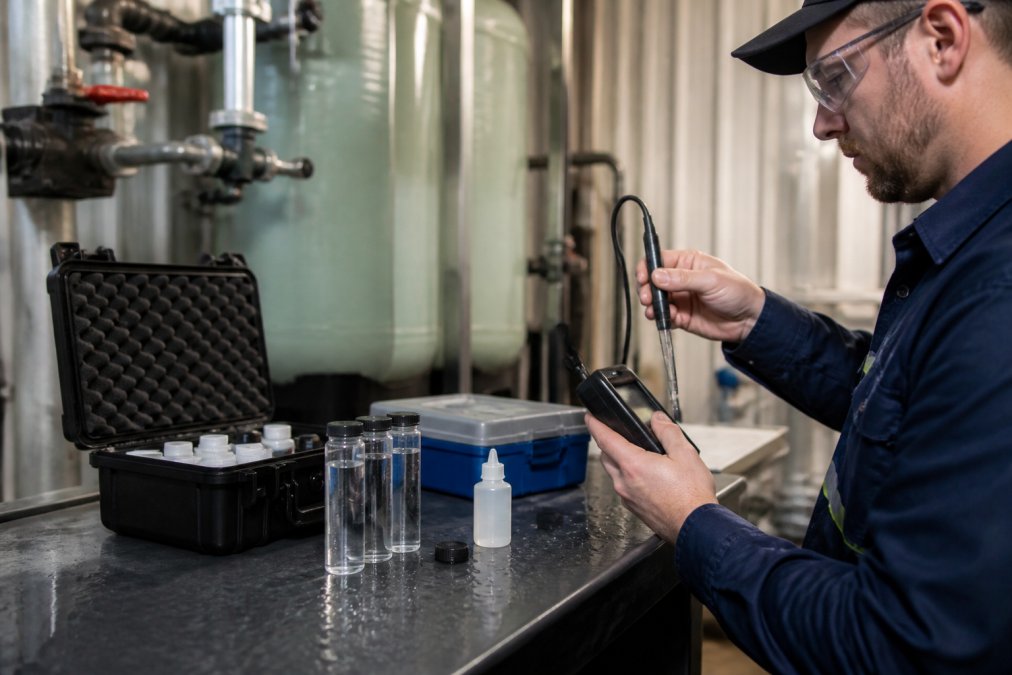
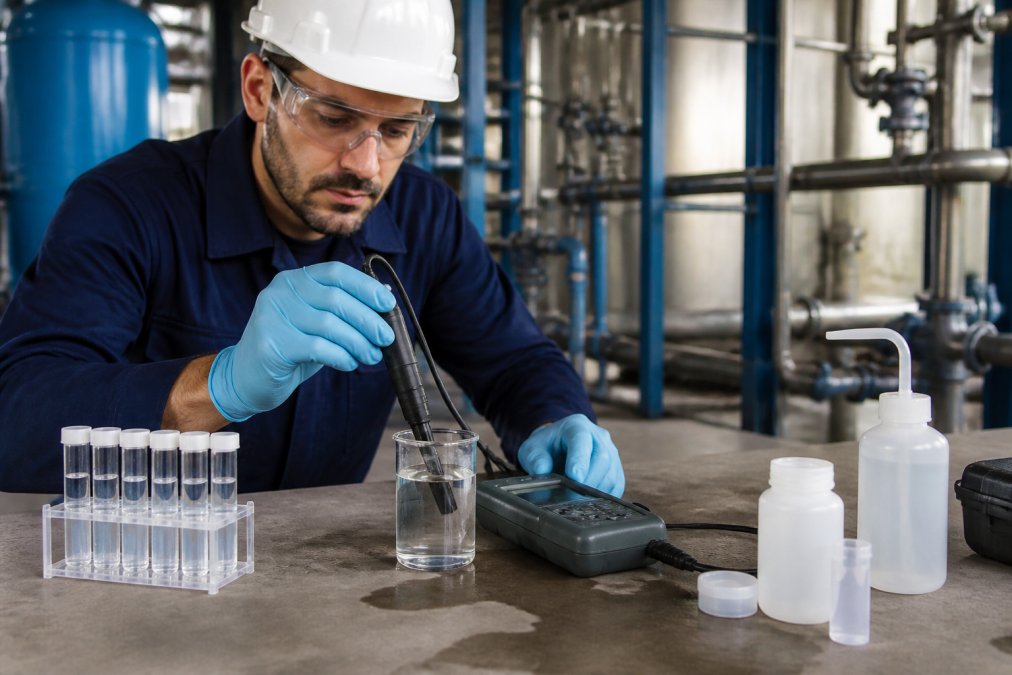
Potentiometric measurement uses an electronic pH meter with a glass electrode. This is the standard for continuous monitoring and daily testing. Accuracy depends heavily on proper calibration and electrode maintenance. Most industrial facilities use benchtop meters for lab testing and submersible probes for continuous monitoring in tanks or distribution lines.
Reagent-based testing (titration) involves adding chemical reagents to a water sample and measuring color changes or the volume of reagent needed to reach an endpoint. This method is slower but highly accurate and doesn't require electricity. It's useful for backup verification.
Field test strips provide quick estimates but lack the precision required for regulatory compliance. They're useful for initial screening but never acceptable as your primary testing method.
For alkalinity testing, titration is the standard method. You add a standardized acid to the sample until the pH drops to a specific endpoint, then calculate alkalinity based on the volume of acid consumed.
Calibration and Maintenance of Industrial Sensors
Electronic pH meters are only as good as their calibration. Calibrate your pH meter before each use with buffer solutions of known pH. Standard calibration uses pH 7 and pH 4 (or pH 10) buffers. Two-point calibration accounts for electrode drift and gives you reliable readings across your operating range.
Buffer solutions degrade over time. Replace them every 6-12 months, even if they appear unchanged. Glass electrodes need regular maintenance. Rinse them with distilled water between samples, never let them dry out. Store them in storage solution when not in use. Most electrodes last 1-3 years before they develop slow response times or drift.
Submersible probes used for continuous monitoring require even more attention. Clean them weekly and recalibrate monthly. Many facilities install dual probes so one can be removed for cleaning while the other continues monitoring.
Monitoring Frequency and Cost-Benefit Analysis
How often should you test? Your NPDES permit specifies minimum frequency, but optimal frequency depends on your system stability, treatment effectiveness, and risk tolerance.
High-volume industrial discharge typically requires daily or weekly testing. Smaller operations with stable, well-controlled water treatment might test monthly. The key is testing frequently enough to catch problems before they damage equipment or violate discharge permits.
The cost-benefit calculation is straightforward: regular testing costs a few hundred dollars monthly. One unplanned equipment failure or regulatory violation costs tens of thousands. Continuous monitoring with automated probes offers real-time data and alerts when pH drifts outside acceptable ranges, catching problems immediately rather than days later.
Equipment Protection and Corrosion Prevention Through Testing
Impact of Alkaline Water on Industrial Systems
Alkaline water protects metal equipment from corrosion by forming a protective mineral layer on pipe and equipment surfaces. However, alkaline water that's too alkaline causes scale formation, mineral deposits that reduce flow rates, insulate heat transfer surfaces, and eventually clog distribution systems.
The sweet spot for most industrial applications is pH between 7.5 and 8.0 with alkalinity between 80-120 mg/L. This range provides corrosion protection without promoting excessive scale. Testing reveals whether your treatment is actually achieving this balance.
Scale Formation and Water Hardness Management
Scale forms when minerals in water precipitate out and deposit on surfaces. The primary culprits are calcium and magnesium. Hard water combined with high pH and alkalinity accelerates scale formation.
Water hardness is measured in mg/L of calcium carbonate equivalent. Industrial systems typically tolerate hardness up to 200-300 mg/L, but this depends on temperature and pH. Hot water systems scale more readily than cold water systems at the same hardness level.
Testing water hardness alongside pH and alkalinity gives you the complete picture. High hardness with high alkalinity requires aggressive treatment to prevent scale. More often, industrial facilities use corrosion inhibitors and scale inhibitors, chemical treatments that prevent corrosion and scale without removing hardness. Testing confirms these chemicals are working.
Testing Alkaline Water for Your Industrial Operations
Step 1: Establish Your Water Quality Baseline
Before implementing a testing program, understand what your water actually is right now. Conduct a comprehensive analysis of your incoming water supply and your treatment system's output.
Test pH, total alkalinity, hardness, and any other parameters specified in your discharge permit. Document the results. This baseline becomes your reference point for all future testing and reveals whether your current treatment system is delivering compliant water.
Step 2: Select and Calibrate Your Testing Equipment
Choose testing equipment appropriate for your operation's size and complexity. A small construction site needs a portable pH meter and test kit for alkalinity. A data center needs a benchtop meter for daily lab testing plus continuous monitoring probes.
Purchase calibration buffers and replacement supplies before you start testing. Calibrate your equipment according to the manufacturer's instructions and document the calibration in a log. Train staff who will perform testing on proper technique: sample collection, buffer handling, rinsing procedures, and calibration steps.
Step 3: Implement a Testing Schedule and Documentation Process
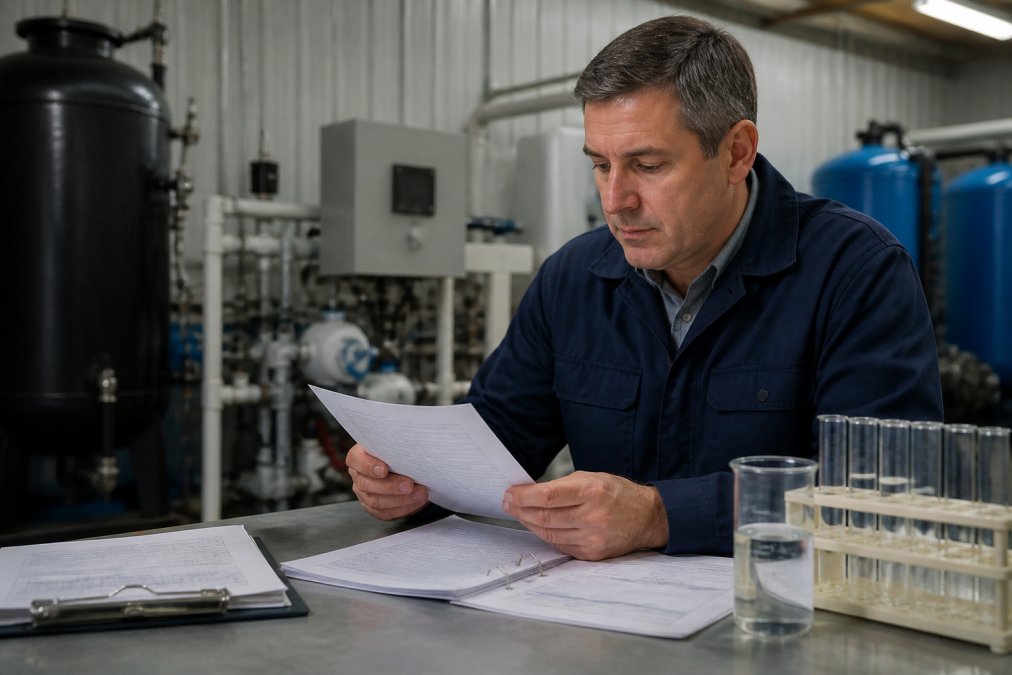
Establish a testing frequency that meets your permit requirements and matches your risk tolerance. At minimum, this should be weekly. Create a simple log or spreadsheet to record results: date, time, pH reading, alkalinity reading, any other parameters, the technician's name, and notes about unusual observations.
Assign responsibility clearly. One person should own the testing program and ensure it happens on schedule. Backup coverage prevents gaps when someone is absent. Review results regularly and look for trends. Is pH slowly rising? Is alkalinity becoming unstable? Trends reveal problems before they become failures.
Step 4: Respond to Test Results and Adjust Treatment
Testing data only matters if you act on it. When results drift outside acceptable ranges, adjust your treatment system. For pH that's too low, increase alkalinity treatment or reduce acid addition. For pH that's too high, reduce alkalinity treatment or add acid.
For alkalinity that's too low, add more alkalinity treatment. For alkalinity that's too high, dilute with lower-alkalinity water or adjust treatment to reduce alkalinity addition. Document every adjustment you make. This creates a treatment history that helps you understand what works for your specific water supply and equipment.
Industrial alkaline water testing requirements exist because water quality directly impacts your equipment's lifespan, your regulatory standing, and your operational reliability. For data centers, construction sites, manufacturing facilities, and fire departments across Texas, consistent water testing prevents costly failures and keeps operations running smoothly.
Our True North, LLC provides high-volume alkaline water that meets industrial standards, backed by consistent quality and reliable pickup. Rather than managing treatment and testing complexity internally, many operations benefit from a proven water supply that arrives ready to use. Get a Free Estimate from Our True North, LLC and discover how a dependable alkaline water source simplifies your operations while protecting your equipment investment.
| Testing Parameter | Typical Frequency | Acceptable Range | Why It Matters |
|---|---|---|---|
| pH | Daily to weekly | 6.5-8.5 | Prevents corrosion and scale formation |
| Total Alkalinity | Weekly to monthly | 80-120 mg/L | Maintains pH stability and buffering capacity |
| Water Hardness | Monthly | 50-300 mg/L (depends on application) | Predicts scale formation risk |
| Temperature | Continuous | Application-dependent | Affects corrosion and scale rates |
Frequently Asked Questions
What pH level should alkaline water maintain for industrial use?
Industrial alkaline water typically maintains a pH between 7.0 and 8.5, depending on your specific application. Data centers and cooling systems often require pH levels around 7.5 to 8.0 to prevent corrosion while protecting equipment. Your facility's exact requirement depends on the metals and materials in contact with the water. Testing frequency helps ensure your supply stays within the acceptable range for your operations.
How often should industrial water systems be tested for pH and alkalinity?
Testing frequency depends on your operation's scale and criticality. High-volume users like data centers typically test daily or multiple times weekly to catch fluctuations early. Most industrial facilities test at minimum weekly, with some conducting tests every shift. Cost-benefit analysis shows that frequent testing prevents expensive corrosion damage and equipment failures. Your testing schedule should align with your facility's downtime tolerance and regulatory obligations.
What are the primary water quality testing parameters for industrial operations?
Beyond pH and total alkalinity, industrial water testing includes dissolved solids, water hardness, conductivity, and contaminant control measures. Potentiometric measurement provides accuracy for pH, while titration methods measure alkalinity directly. Depending on your industry, you may also test for specific ions, buffer capacity, and effluent standards compliance. Documenting all parameters protects both your equipment and your facility's regulatory standing.
What regulatory standards govern industrial water quality?
The EPA establishes standards under the Clean Water Act for industrial discharge and wastewater. Specific requirements depend on your industry and whether you discharge to municipal systems or directly to freshwater ecosystems. Most industrial facilities must monitor and report pH, alkalinity, and other quality criteria regularly. Your facility's discharge permit outlines exact testing and documentation requirements. Working with a reliable water supplier who understands these standards reduces compliance risk.
How do I know if my alkaline water supply meets industrial standards?
Request testing documentation and certifications from your water supplier before committing to a large-volume contract. Ask for recent chemical analysis results showing pH, total alkalinity, dissolved solids, and water hardness. Reliable suppliers maintain calibration records for their testing equipment and can provide third-party verification. Your facility should also conduct independent testing when you begin using a new supply to confirm it meets your equipment specifications and regulatory requirements.
What is the acceptable alkalinity range for water used in industrial processes?
Total alkalinity typically ranges from 50 to 200 mg/L for most industrial applications, though your specific range depends on your process needs. Data centers and cooling systems often prefer alkalinity in the 80 to 120 mg/L range to balance corrosion control with scale prevention. Higher alkalinity provides better buffer capacity against pH swings, while lower alkalinity reduces scale formation risk. Your equipment manufacturer's specifications and your facility's water treatment system should guide your target alkalinity range.
What happens if my industrial water tests outside the acceptable pH or alkalinity range?
Out-of-range results require immediate investigation and adjustment. If pH is too low, the water becomes corrosive and damages pipes and equipment. If pH is too high, scale formation accelerates and clogs systems. Most facilities adjust treatment processes, add neutralization chemicals, or implement ion exchange systems to correct the issue. Document the problem, corrective action taken, and follow-up testing results for regulatory compliance. Prevention through consistent testing and reliable supply sourcing is more cost-effective than emergency repairs.
This article was written using GrandRanker
Frequently Asked Questions
What pH level should alkaline water maintain for industrial use?
Industrial alkaline water typically maintains a pH between 7.0 and 8.5, depending on your specific application. Data centers and cooling systems often require pH levels around 7.5 to 8.0 to prevent corrosion while protecting equipment. Your facility's exact requirement depends on the metals and materials in contact with the water. Testing frequency helps ensure your supply stays within the acceptable range for your operations.
How often should industrial water systems be tested for pH and alkalinity?
Testing frequency depends on your operation's scale and criticality. High-volume users like data centers typically test daily or multiple times weekly to catch fluctuations early. Most industrial facilities test at minimum weekly, with some conducting tests every shift. Cost-benefit analysis shows that frequent testing prevents expensive corrosion damage and equipment failures. Your testing schedule should align with your facility's downtime tolerance and regulatory obligations.
What are the primary water quality testing parameters for industrial operations?
Beyond pH and total alkalinity, industrial water testing includes dissolved solids, water hardness, conductivity, and contaminant control measures. Potentiometric measurement provides accuracy for pH, while titration methods measure alkalinity directly. Depending on your industry, you may also test for specific ions, buffer capacity, and effluent standards compliance. Documenting all parameters protects both your equipment and your facility's regulatory standing.
What regulatory standards govern industrial water quality?
The EPA establishes standards under the Clean Water Act for industrial discharge and wastewater. Specific requirements depend on your industry and whether you discharge to municipal systems or directly to freshwater ecosystems. Most industrial facilities must monitor and report pH, alkalinity, and other quality criteria regularly. Your facility's discharge permit outlines exact testing and documentation requirements. Working with a reliable water supplier who understands these standards reduces compliance risk.
How do I know if my alkaline water supply meets industrial standards?
Request testing documentation and certifications from your water supplier before committing to a large-volume contract. Ask for recent chemical analysis results showing pH, total alkalinity, dissolved solids, and water hardness. Reliable suppliers maintain calibration records for their testing equipment and can provide third-party verification. Your facility should also conduct independent testing when you begin using a new supply to confirm it meets your equipment specifications and regulatory requirements.
What is the acceptable alkalinity range for water used in industrial processes?
Total alkalinity typically ranges from 50 to 200 mg/L for most industrial applications, though your specific range depends on your process needs. Data centers and cooling systems often prefer alkalinity in the 80 to 120 mg/L range to balance corrosion control with scale prevention. Higher alkalinity provides better buffer capacity against pH swings, while lower alkalinity reduces scale formation risk. Your equipment manufacturer's specifications and your facility's water treatment system should guide your target alkalinity range.
What happens if my industrial water tests outside the acceptable pH or alkalinity range?
Out-of-range results require immediate investigation and adjustment. If pH is too low, the water becomes corrosive and damages pipes and equipment. If pH is too high, scale formation accelerates and clogs systems. Most facilities adjust treatment processes, add neutralization chemicals, or implement ion exchange systems to correct the issue. Document the problem, corrective action taken, and follow-up testing results for regulatory compliance. Prevention through consistent testing and reliable supply sourcing is more cost-effective than emergency repairs.