 ultimate-guide
Why Construction Sites Need High-Volume Water Access
Table of Contents
- Why Construction Sites Need High-Volume Water Access
- Concrete Production and Dust Suppression Water Requirements
- OSHA Water Requirements for Construction Sites
- Site Hygiene, Worker Hydration, and Health Standards
- Water Management and Drainage Systems
- Bulk Water Supply for Construction: Planning and Logistics
- Preventing Delays and Structural Damage Through Reliable Water Access
- Frequently Asked Questions
Last Updated: September 29, 2026
Why Construction Sites Need High-Volume Water Access
Construction operations demand far more water than most people realize. From concrete mixing to dust suppression, from worker hydration to equipment maintenance, the volume requirements are relentless. A typical mid-sized construction project can consume thousands of gallons daily, and that demand doesn't pause for supply chain delays or logistical hiccups.
Why construction sites need high-volume water access goes beyond convenience, it's fundamental to project success. Without reliable access to bulk water, construction teams face concrete that fails to cure properly, dust that violates air quality standards, dehydrated workers, structural damage from poor drainage, and costly project delays. The difference between a site with dependable water supply and one scrambling to find it often determines whether a project stays on schedule and within budget.
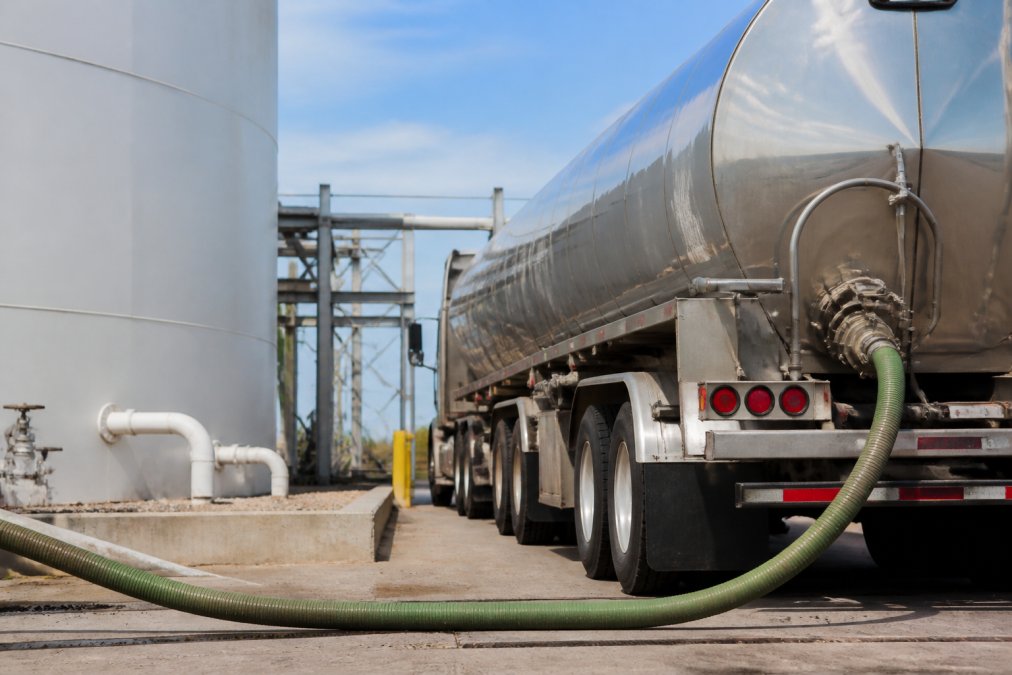
Our True North, LLC understands these demands firsthand. We provide high-volume, clean alkaline water specifically designed for construction crews, industrial operations, and other demanding sites. Our pickup-based model eliminates delivery delays that plague traditional water suppliers, ensuring your site gets the volume you need exactly when you need it.
Concrete Production and Dust Suppression Water Requirements
Concrete production is thirsty work. Mixing concrete requires precise water ratios, typically 40-60% of the total mix by weight, and any shortfall compromises structural integrity. A single concrete pour for a foundation or structural slab can demand hundreds or thousands of gallons, depending on project scale.
Beyond mixing, dust suppression during concrete cutting, grinding, and demolition requires continuous water application. OSHA recognizes dust as a serious respiratory hazard, and controlling it means keeping water flowing throughout the workday. Many sites use wet-cutting methods, dust collection systems with water spray, and periodic site watering to manage particulate matter. This isn't occasional use, it's sustained, high-volume consumption from project start to finish.
The challenge intensifies during hot weather. Water evaporates faster, concrete cures differently, and dust control becomes even more critical. Sites that underestimate their water needs often find themselves rationing mid-project, which forces delays in concrete work and compromises dust control protocols. Having access to consistent, bulk water supply prevents these bottlenecks entirely.
OSHA Water Requirements for Construction Sites
Federal workplace safety regulations require employers to provide potable water for worker consumption. OSHA standards mandate that potable water be readily available and accessible to all employees, with specific requirements for quantity based on worksite conditions and worker count.
While OSHA does not mandate a specific gallon-per-worker minimum in its general standards, the agency enforces water access through the General Duty Clause and references industry best practices. The American Conference of Governmental Industrial Hygienists (ACGIH) recommends a baseline of 1 quart of water per worker per hour in moderate conditions, scaling up to 1.5-2 quarts per hour in hot environments (above 85°F). For a 50-person crew working an 8-hour shift in summer heat, this translates to 400-800 gallons daily for drinking and basic hygiene alone.
Beyond drinking water, OSHA requires adequate sanitation facilities with water hookups. 29 CFR 1926.51(c) mandates that toilet facilities be provided in numbers based on workforce size: 1 facility per 10 workers for the first 50, then 1 per 20 for each additional 50. Each portable toilet consumes 20-40 gallons daily for flushing and cleaning. A 75-person site with 8 portable units requires 160-320 gallons daily just for sanitation.
Emergency response infrastructure adds another layer. OSHA requires eyewash stations (29 CFR 1910.151(c)) and emergency showers near hazardous areas, typically in excavation zones, chemical storage, or welding stations. A single eyewash station uses 3-5 gallons per activation; an emergency shower uses 20-30 gallons per minute when deployed. While these aren't daily consumption, they must be supplied and maintained from the site's bulk water system.
Regional and seasonal variations matter significantly. In arid climates, water scarcity regulations may impose additional restrictions on construction water use, requiring permits or limiting supply sources. In high-humidity regions, water demand for dust suppression may be lower, but dewatering requirements increase. OSHA citations for inadequate water access typically cite General Duty Clause violations and can result in fines ranging from $10,000-$15,000 per violation, making compliance both a safety and financial imperative.
The practical implication: a mid-sized construction project must plan for 1,000-2,000+ gallons daily across drinking, sanitation, emergency response, and equipment maintenance, before accounting for concrete production or dust suppression. Underestimating this volume creates compliance risk and safety exposure.
Site Hygiene, Worker Hydration, and Health Standards
Worker health depends directly on water access. Dehydration reduces cognitive function, increases injury risk, and leads to heat-related illness, a genuine threat on construction sites where workers operate heavy equipment and work at heights. Providing clean, accessible water throughout the workday isn't optional; it's a baseline health requirement.
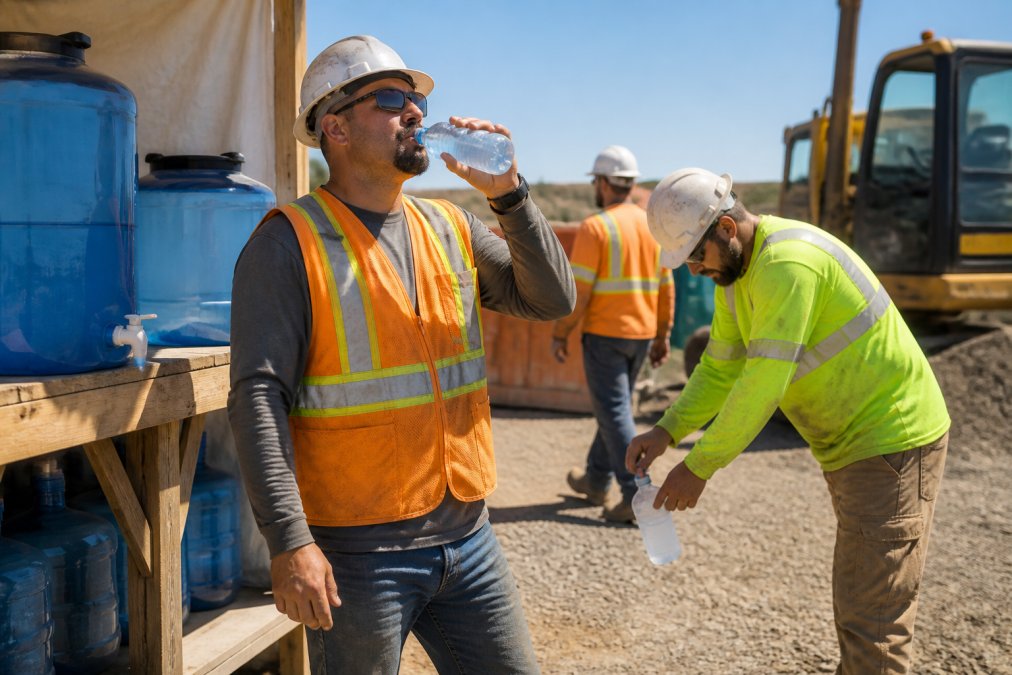
Beyond drinking, workers need water for hand washing, cleaning tools, and personal hygiene. Many sites operate portable restrooms that require water hookups. A single portable toilet can use 20-40 gallons daily. Multiply that across a site with 10-15 units, and you're consuming 200-600 gallons just for sanitation.
Hot weather amplifies these needs. During peak summer months, worker water consumption can double or triple. Sites without adequate supply either ration water, creating health and safety risks, or face emergency supply runs that disrupt work schedules. The cost of a water supply failure extends beyond the water itself; it includes lost productivity, potential OSHA violations, and safety incidents.
Water Management and Drainage Systems
Proper site drainage prevents structural damage, equipment failure, and environmental violations. Water accumulation around foundations, in excavations, or beneath formwork creates multiple problems: soil instability, concrete degradation, foundation settling, and environmental contamination. Managing water means both supplying it for beneficial uses and actively removing excess through drainage systems.
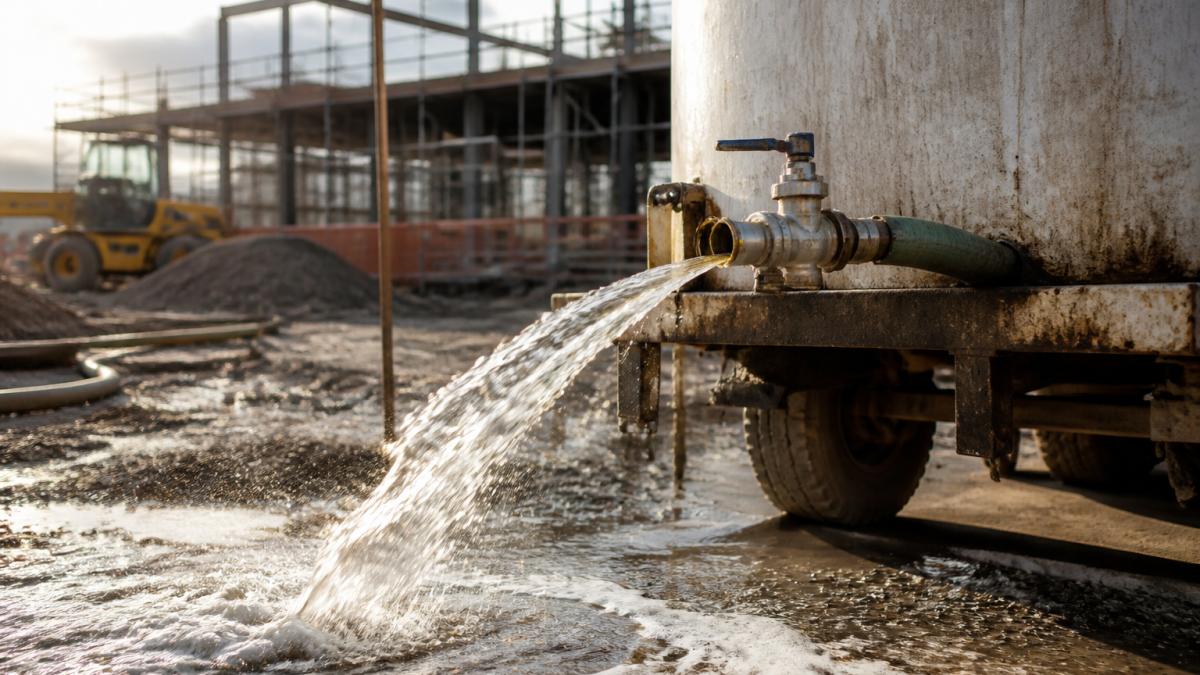
Most construction sites require dewatering, the removal of groundwater and surface water from excavations. Dewatering pumps operate continuously during excavation and foundation work, consuming water as they move it off-site. This isn't water being "used" in the traditional sense; it's water being managed as a site hazard. However, the infrastructure required to handle dewatering, pump placement, discharge management, sediment control, depends on having a reliable water supply strategy that accounts for this volume.
Effective site drainage also includes surface water management. Grading, swales, and temporary drainage channels direct water away from active work areas. During heavy rain or in areas with poor natural drainage, sites may need to actively pump water off the property.
Bulk Water Supply for Construction: Planning and Logistics
- Concrete production volume and mixing water requirements
- Dust suppression hours and water application rates (typically 0.5-2 gallons per square foot per hour, depending on method)
- Worker count and daily consumption (1-2 gallons per worker for drinking, plus 20-40 gallons per portable toilet per day)
- Equipment washing and maintenance water
- Dewatering and drainage management volume
- Seasonal variations (summer demand is typically 30-50% higher than winter)
Water Sourcing Options and Trade-Offs
Municipal Water Hookups: Direct connection to municipal water lines is the most reliable and cost-effective option for urban and suburban sites. Typical costs range from $500-$2,000 for connection setup, plus $3-$8 per 1,000 gallons of metered usage. The advantage is unlimited supply and consistent water quality. The disadvantage is that municipal systems may have pressure limitations (typically 40-80 PSI), requiring booster pumps for high-volume applications like dust suppression. Connection requires coordination with local water authorities and may involve 2-4 week lead times. This method works best for projects lasting 6+ months in areas with adequate municipal infrastructure.
Storage Infrastructure and Cost-Benefit Analysis
- Small tanks (2,500-5,000 gallons): Require frequent deliveries (2-3 times weekly) but occupy minimal site space. Best for urban sites with tight footprints or short-duration projects (under 3 months).
- Medium tanks (5,000-10,000 gallons): Allow weekly or biweekly deliveries and provide buffer for demand spikes. This is the most common choice for mid-sized projects (3-12 months).
- Large tanks (15,000+ gallons): Reduce delivery frequency to monthly or less but require significant site space and foundation preparation. Cost-effective for large projects (12+ months) with high consumption or remote locations where delivery is expensive.
Climate-Specific Water Management
Digital Monitoring for Supply Optimization
- Hourly consumption patterns (identifying peak-use times)
- Leak detection (sudden pressure drops or unexplained volume loss)
- Delivery scheduling optimization (data-driven predictions of when to reorder)
Planning Best Practice
Preventing Delays and Structural Damage Through Reliable Water Access
Project delays caused by water supply failures are expensive and cascading. If concrete can't be mixed on schedule, the entire day's pour is delayed. If dust suppression stops, work halts due to air quality violations. If worker hydration becomes inadequate, safety incidents and OSHA violations follow. Each of these scenarios creates downstream impacts: crews stand idle, equipment sits unused, and project timelines slip.
Frequently Asked Questions
Why do construction sites need such large quantities of water?
Construction sites require high-volume water access for multiple critical functions: mixing concrete and mortar, controlling dust to protect worker health, maintaining proper site drainage and dewatering, ensuring worker hydration in hot conditions, and meeting OSHA safety standards. A typical mid-size project can consume thousands of gallons daily across these operations. Without adequate supply, crews face delays, safety violations, and potential structural damage from improper water management.
What are OSHA water requirements for construction sites?
OSHA requires employers to provide potable water for worker hydration at a rate of approximately one quart per employee per hour during hot weather work. Sites must also maintain water for dust suppression activities and ensure adequate drainage systems to prevent standing water and soil instability. Compliance with these requirements prevents heat-related illness, respiratory issues from dust exposure, and environmental violations that can result in citations and project shutdowns.
How does a bulk water supply for construction improve project timelines?
Consistent bulk water supply eliminates the operational delays caused by unreliable delivery schedules or insufficient inventory. When water is available on demand, crews can maintain continuous concrete curing, keep dust suppression systems running without interruption, and avoid halting work due to water shortages. This reliability reduces project delays, prevents costly rework from improper curing or drainage failures, and keeps teams productive throughout the construction phase.
What water volume should a construction project plan for?
Water consumption depends on project scope, climate, and activities. Concrete mixing alone can require 200-300 gallons per cubic yard. Dust suppression on large sites may demand 500-1,000+ gallons daily. Worker hydration needs 1+ quart per person per hour in hot conditions. Site drainage and dewatering requirements vary based on soil permeability and groundwater levels. Calculating total needs requires assessing all these factors, consult with your water supplier and project manager to determine your specific volume and storage tank capacity.