 blog
Jobes Alkaline Water vs Culligan: Bulk Water Guide
Table of Contents
- Jobes Alkaline Water vs Culligan: Quick Comparison
- Bulk Alkaline Water for Construction Sites
- Water Supply Logistics for Data Centers
- Commercial Water Delivery vs Pickup
- Head-to-Head Performance and Water Quality
- Total Cost of Ownership for High-Volume Operations
- Frequently Asked Questions
Last Updated: September 22, 2026
Jobes Alkaline Water vs Culligan: Quick Comparison
Choosing between Jobes Alkaline Water vs Culligan comes down to one question: do you need a truck at your gate, or a station you control? This comparison breaks down how each serves high-volume operations, from data centers to construction crews.
The short answer: Culligan is built around a delivery relationship, while Jobes Alkaline Water is built around a refill station model.
| Factor | Jobes Alkaline Water | Culligan |
|---|---|---|
| Supply model | Refill station pickup | Scheduled delivery |
| Best for | Teams with transport and storage | Teams without either |
| Scheduling control | You set the timing | Route-dependent |
| Volume ceiling | Limited by your transport | Limited by route capacity |
| Failure point | Your pickup discipline | A missed delivery window |
What Each Provider Offers
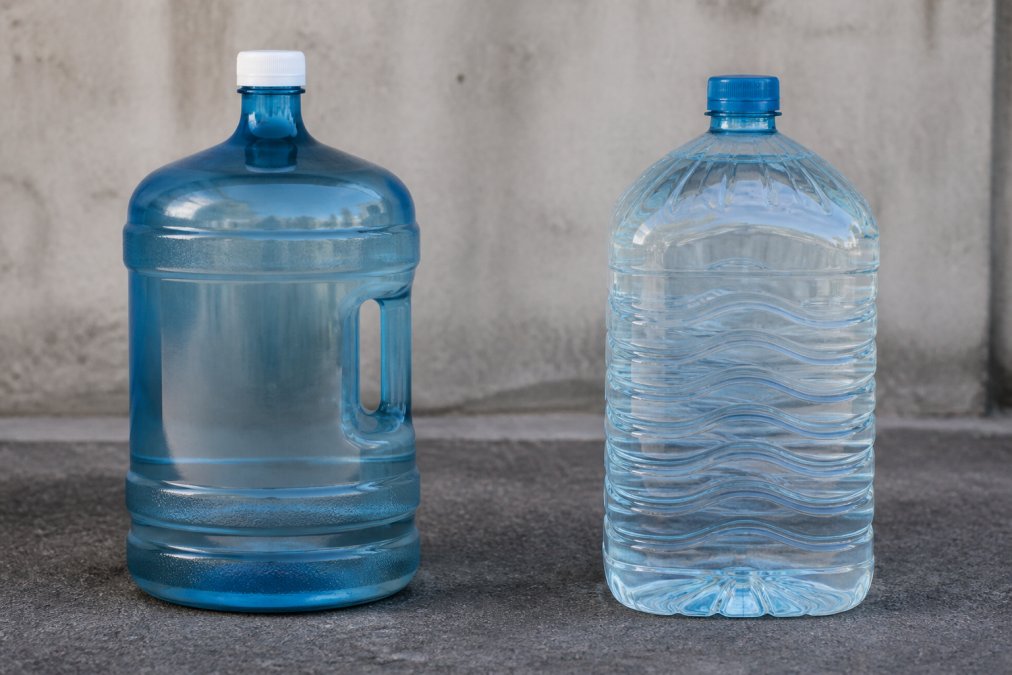
Jobes Alkaline Water operates as a refill and pickup option: you send a vehicle and containers to the source.
Who Each Service Fits Best
Culligan fits operations that want water handled entirely off their plate: no vehicle, no driver time, no storage planning.
Bulk Alkaline Water for Construction Sites
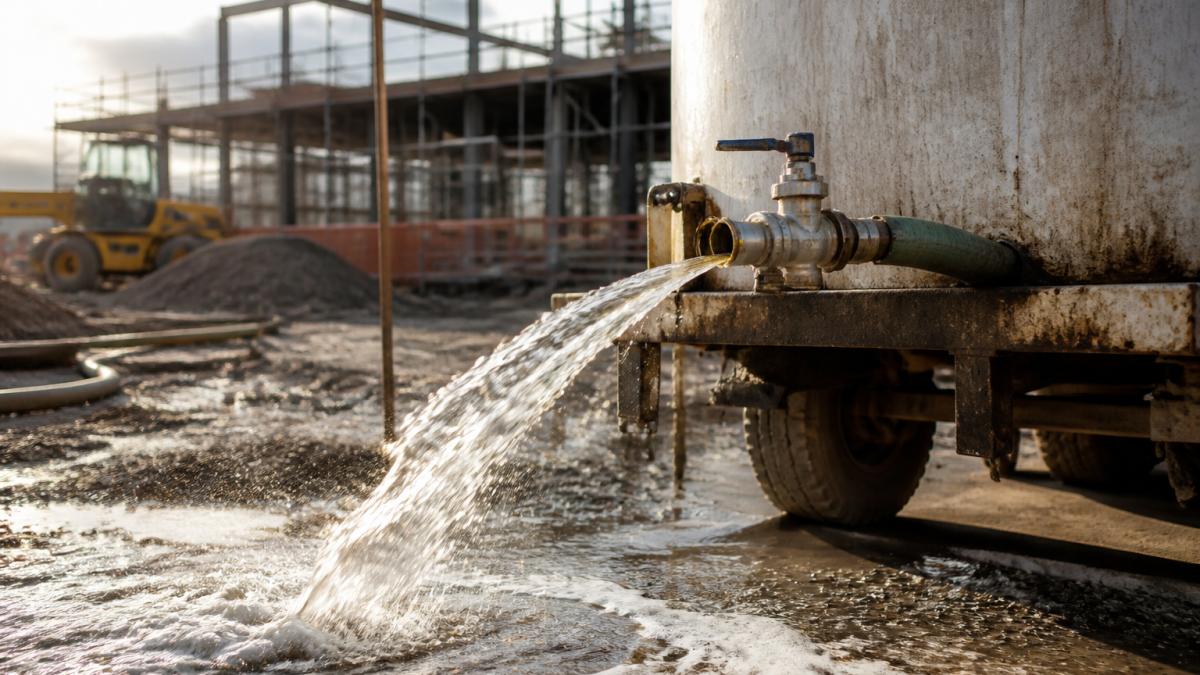
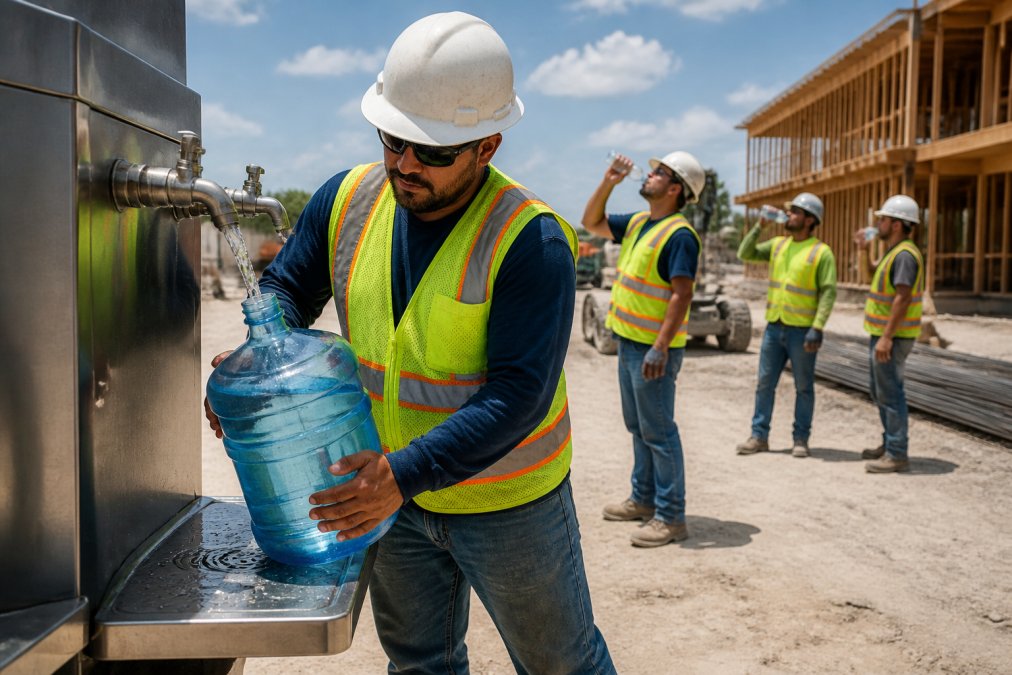
Construction sites are the clearest case for bulk pickup. Crews already move trucks, trailers, and equipment constantly, so adding a water run to an existing trip costs almost nothing in labor.
Crew Hydration and Equipment Needs
A common mistake is sizing water supply to headcount alone. Crews working in heat drink more than standard estimates suggest, and equipment maintenance draws water too.
Plan for two separate demands:
- Drinking water for crew hydration across a full shift
- Utility water for dust control, tool cooling, and equipment cleaning
Scheduling Around Project Timelines
Water demand tracks the project calendar, not a fixed weekly rhythm. A concrete pour week looks nothing like a punch-list week.
Water Supply Logistics for Data Centers
Data centers need water for two jobs rarely discussed together: cooling support and facility maintenance. Both demand consistency and fail badly when supply is unpredictable.
Volume Demands and Uptime Requirements
A data center cannot treat water as a convenience item. Cooling, humidification, and cleaning all depend on a steady supply, and a gap becomes an operational problem fast.
Cooling and Facility Maintenance Water
Water used in and around cooling infrastructure has to be clean. Mineral-heavy or inconsistent supply leaves deposits and scale that shorten equipment life and add maintenance hours.
Commercial Water Delivery vs Pickup
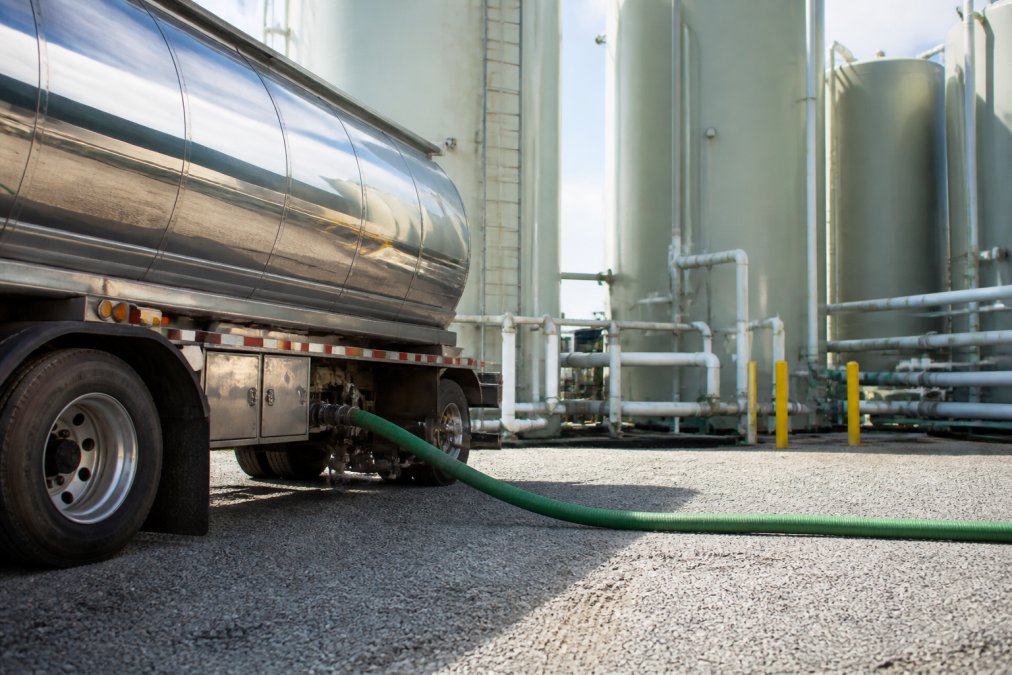
Commercial water delivery and pickup differ in one fundamental way: who owns the timing risk. Delivery shifts scheduling to the supplier. Pickup keeps it in your operation.
How the Pickup Model Changes Your Operations
Pickup converts water from a scheduled event into a routine task.
What changes:
- You no longer wait on a delivery window
- You can refill on your own timeline, including same-day
- You absorb the transport cost and driver time
- You need storage capacity to build a buffer
When Delivery Still Makes Sense
Delivery remains the better choice when transport is genuinely unavailable. A single-manager facility with no fleet, storage, or spare labor should not force a pickup model.
Head-to-Head Performance and Water Quality
Water quality claims are easy to make and hard to verify, so the useful comparison is documentation and mechanism: what is each provider doing to the water, and what records prove it?
How Alkaline Water Is Actually Produced
Alkaline water is not a single product but a result, reached three common ways:
- Electrolysis (ionization): a unit splits the incoming stream into an alkaline fraction and an acidic fraction using charged plates. The alkaline side is what gets bottled or dispensed. This is the method most countertop and under-sink "alkaline ionizer" units use.
- Mineral addition: purified water is dosed with mineral blends, commonly calcium, magnesium, and potassium, which raises pH and adds back the minerals that reverse osmosis or distillation stripped out. This is the "mineral reintroduction" step you'll see named on spec sheets.
- Naturally alkaline source water: the water already carries dissolved minerals from the geology it passed through, so no post-treatment is needed. Spring sources with limestone or dolomite contact are the classic example.
pH, TDS, and What the Numbers Actually Mean
Two figures do most of the work in a bulk water spec sheet:
- pH measures where the water sits on the 0-14 acid-base scale. Neutral is 7.0. Most municipal tap water lands between roughly 6.5 and 8.5. Alkaline water is generally marketed in the 8.0-9.5 range. Above about 9.5, the water starts to taste flat or soapy, and the alkalinity is doing less for you than the label implies.
- TDS (total dissolved solids) measures the combined mineral content in milligrams per liter (mg/L), which is the same as parts per million (ppm). It is not a quality score by itself, it is a composition question. Low TDS (under ~50 mg/L) usually means the water was purified and lightly remineralized. High TDS (300+ mg/L) can mean a mineral-rich source or simply a lot of dissolved material you didn't ask for.
Testing Documentation to Request From Either Provider
Ask for the same packet from both, and compare like for like:
- A current third-party lab report, not an in-house printout, dated within the last 12 months
- Results reported against the EPA's drinking water standards and contaminant limits, which set the baseline any potable supply must meet
- pH and TDS listed as measured values, with the test method named
- A stated testing frequency (monthly, quarterly, per batch) rather than a single snapshot
- For mineral-dosed water, the mineral blend and target concentrations
Flow Rate, Fill Speed, and Mineral Consistency
Fill speed decides how long a pickup takes, and it belongs in the same conversation as water quality because both are properties of the station, not the brand.
Total Cost of Ownership for High-Volume Operations
The sticker price per gallon is the least useful number here. Total cost of ownership includes transport, labor, storage, and the cost of a supply failure, so build the same five-year ledger for each model.
A Five-Year TCO Framework You Can Fill In
Most comparisons stop at price per gallon. Build the ledger instead and run it out five years, long enough to capture equipment replacement and filter or membrane service cycles, short enough that assumptions stay defensible.
For each model, list costs in these buckets:
One-time (Year 0)
- Storage tanks, containers, and racks
- Any dispensing or fill equipment you own
- Site prep: pad, shade structure, plumbing, or electrical if needed
- Delivery or pickup vehicle if you don't already have one
Recurring (Years 1-5)
- Product cost: price per gallon × annual gallons
- Transport: fuel, vehicle wear, and driver hours per trip × trips per year
- Storage upkeep: cleaning, replacement containers, sanitizing
- Service and maintenance: filter or membrane replacement, sanitization visits, calibration
- Administrative time: ordering, scheduling, invoice handling
Risk (Years 1-5)
- Downtime cost per dry-tank event × expected events per year
- Emergency retail purchases at premium prices
- Expedited delivery surcharges if the model offers them
Delivery vs. Pickup: Where the Money Actually Goes
The two models move the same dollars into different buckets.
Hidden Costs of Delivery, Downtime, and Storage
The hidden cost in any delivery model is the missed window. When a truck doesn't arrive, someone has to solve it immediately, usually at the worst possible time, a maintenance scramble for a data center, a retail-price run for a construction crew. Neither shows up on the invoice, and both are real.
Frequently Asked Questions
Does Culligan offer bulk alkaline water for industrial sites?
Culligan provides water treatment systems, bottled water delivery, and some alkaline options through their dealer network. For industrial operations needing high-volume alkaline water, availability depends on your local dealer's capacity and delivery schedule. If you need consistent large quantities without waiting on a delivery window, a dedicated bulk pickup source may fit better. Confirm volume limits and lead times directly with your local provider before committing.
How does the pickup process for Jobes Alkaline Water compare to Culligan delivery?
Pickup means you collect water on your schedule, avoiding delivery windows and delays. Culligan delivery brings water to your site but depends on routing and availability. For operations with flexible staffing, pickup can reduce wait time and give you control over timing. For sites without staff available to collect water, delivery may still be the practical choice.
Is alkaline water better for construction and industrial hydration?
Alkaline water has a higher pH than standard tap water, which some crews prefer for taste and hydration during long shifts. It is not a replacement for electrolytes lost through heavy sweating. For construction and industrial sites, the bigger factor is reliable volume and clean sourcing. Pair alkaline water with electrolyte replacement during peak heat, and confirm your supplier's testing documentation.
Which water solution is more cost-effective for high-volume operations?
Cost depends on volume, frequency, and whether you pay for delivery. Pickup typically lowers per-gallon cost because you remove the delivery layer, but it adds labor and vehicle time on your end. Delivery bundles convenience into the price. Run a total cost of ownership comparison that includes staff hours, fuel, storage, and downtime risk, not just the invoice price.
High-volume water supply fails for one reason: the model doesn't match how your operation actually moves. If your vehicles are already on the road and you want to stop waiting on delivery windows, Our True North, LLC offers high-volume alkaline water with a simple pickup process, consistent quality, and a flexible schedule built for data centers, industrial sites, construction crews, and fire departments. Get a free estimate and see what your volume actually costs at pickup.