 how-to
How to Scale Water Supply for Industrial Operations
Table of Contents
- What Scaling Water Supply Actually Means for Your Operation
- Step 1: Calculate Your Peak and Base Water Demand
- Step 2: Assess Your Current Infrastructure Capacity
- Step 3: Choose Between On-Site Treatment and Bulk Water Supply Solutions
- Step 4: Build an Industrial Water Logistics Management Plan
- Step 5: Address Water Quality and Scale Prevention
- Common Mistakes When Scaling Water Supply
- Frequently Asked Questions
Last Updated: September 23, 2026
What Scaling Water Supply Actually Means for Your Operation
To scale water supply is to increase the volume of clean water your operation can access, store, and move without interrupting daily work. At Our True North, LLC, we see this most often at data centers, industrial sites, and construction projects where demand runs around the clock. We also serve fire departments and large-scale commercial operations.
Step 1: Calculate Your Peak and Base Water Demand
Start with two numbers: base demand (a normal day) and peak demand (your worst-case day, like a heat wave or full production run).

Here is how to measure both:
- Pull 12 months of usage records if you have them
- Track daily consumption for 30 days as a baseline
- Identify your three highest-use days and average them
- Add a safety margin for growth, usually 15-20%
Data Center Cooling Water Requirements
Data center cooling water requirements are the biggest driver of demand at most server facilities. Cooling towers evaporate water constantly, and that water must be replaced with "make-up water."
A few things drive the total:
- Server load and heat output
- Cooling tower cycles of concentration
- Local climate and humidity
- Hours of full-load operation
Step 2: Assess Your Current Infrastructure Capacity
Your current infrastructure sets the ceiling on what you can deliver. Before adding volume, find the bottleneck, the step most operators skip, and the reason new equipment often fails to fix a supply problem.
Walk through these checkpoints:
- Storage tanks: total usable gallons, not just tank size
- Pumps and flow rate: gallons per minute at peak draw
- Pipe diameter: smaller lines restrict flow as demand rises
- Metering: can you track usage in real time?
- Plumbing integrity: corrosion and leaks quietly steal capacity
Measure Capacity, Do Not Guess It
A tank labeled 10,000 gallons rarely delivers 10,000 gallons. Usable volume sits between the low-level cutoff (where the pump would run dry or suck air) and the high-level shutoff. A tank with a 1,000-gallon dead zone and a 500-gallon safety margin gives you 8,500 usable gallons. Size your buffer on usable gallons, not nameplate gallons.
Find the Bottleneck Before You Buy Anything
Capacity is set by the narrowest point in the chain, not the widest. A common pattern:
- Source or bulk delivery: 500 GPM available
- Storage tank outlet: 300 GPM
- Main line: 250 GPM
- Point-of-use branch: 80 GPM
Pipe Diameter and Velocity
Pipe diameter is the most common hidden limit. As demand rises, velocity rises, and friction loss climbs roughly with the square of velocity. A line that runs quietly at low demand can starve the system at peak. If a 2-inch main is near its limit, upsizing to 3-inch can roughly double flow at the same pressure.
Corrosion and Buildup
Pipe corrosion is a quiet capacity killer. A line that once moved full volume may now be half-blocked by rust and mineral deposits, this is where the two meanings of "scale" meet: mineral scale reduces effective diameter, which reduces flow, which looks exactly like an undersized pipe. Before replacing a line, run a flow test before and after a descaling flush to see whether the loss is diameter or deposits.
Metering and Visibility
You cannot manage capacity you cannot see. At minimum, track tank level and total daily draw; better operations add flow meters at the main header and each major point of use, so a drop shows up as a number instead of a surprise. Real-time level monitoring is inexpensive and pays for itself the first time it prevents a dry tank.
Step 3: Choose Between On-Site Treatment and Bulk Water Supply Solutions
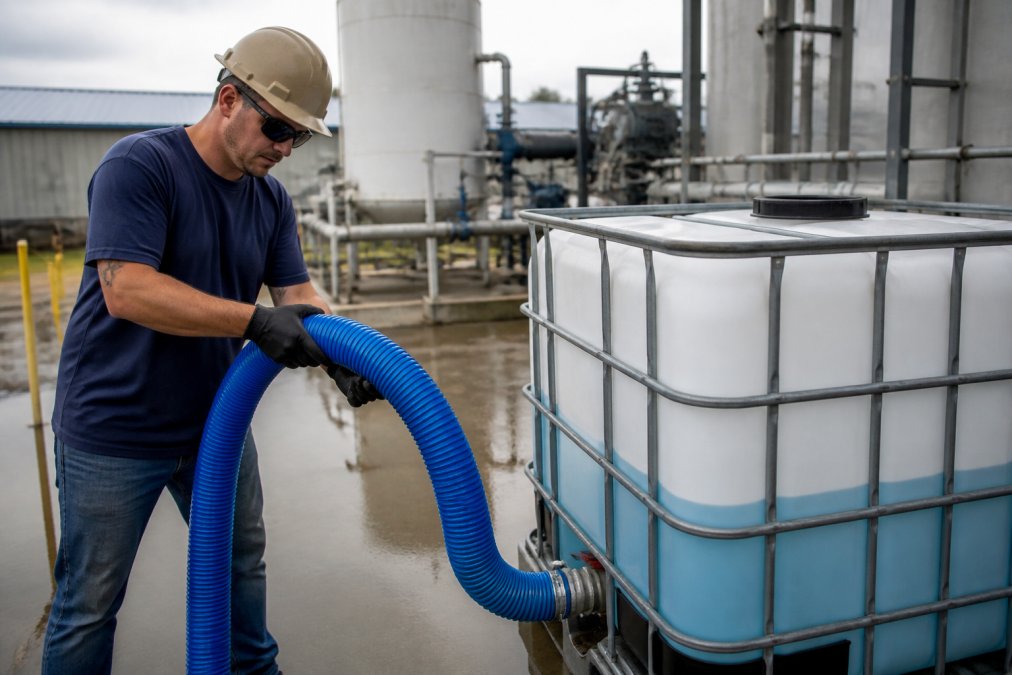
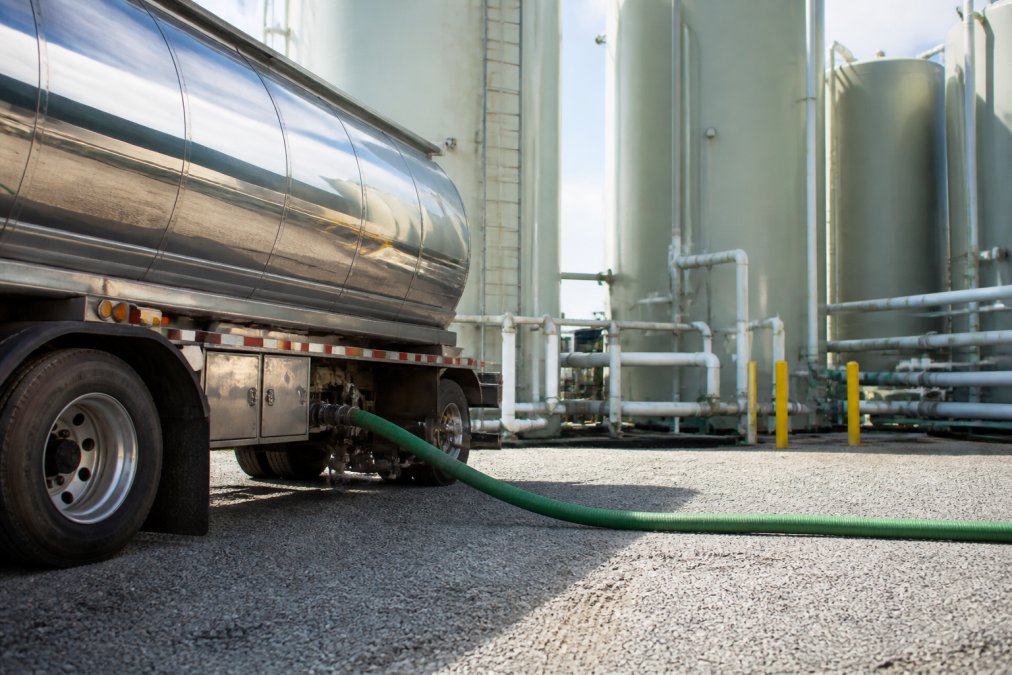
Bulk water supply solutions move large volumes of treated water to your site; on-site treatment cleans water you already have. The right choice depends on volume, water quality, and how fast you need to scale.
| Option | Best For | Main Trade-Off |
|---|---|---|
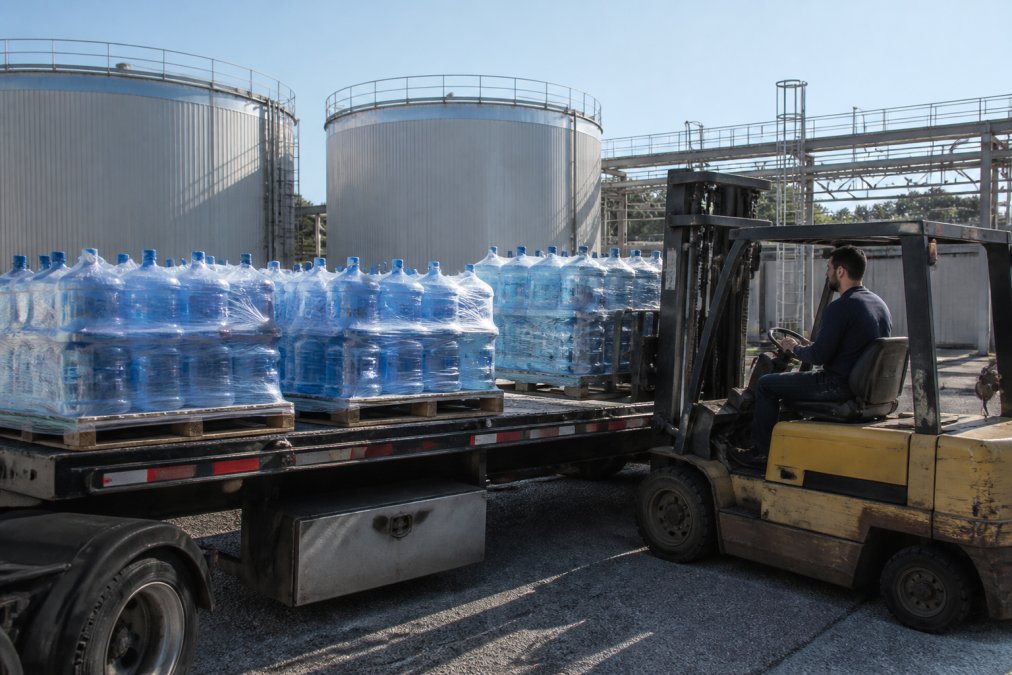
| Bulk pickup supply | Fast scaling, variable demand | Requires transport and storage |
| On-site filtration | Steady demand, existing supply | Higher upfront setup |
| Reverse osmosis | High-purity needs | Rejects a share of input water |
| Water softening | Hard water, scale control | Does not remove all dissolved solids |
DIY vs. Professional Intervention: Cost-Benefit Analysis
DIY works for small, steady operations. Professional support pays off when downtime is expensive.
Ask three questions:
- What does an hour of downtime cost you? If it is high, do not gamble on DIY.
- Do you have staff to monitor and maintain equipment? Treatment systems need attention.
- How fast do you need to scale? Setup and testing take time you may not have.
Step 4: Build an Industrial Water Logistics Management Plan
Industrial water logistics management is how you move, store, and schedule water so supply never runs dry, turning a pile of equipment into a reliable system.
Build your plan around these pieces:
- Storage buffer: hold at least one full peak day on site
- Pickup or delivery schedule: match it to your usage curve
- Backup source: a second supplier or route for emergencies
- Monitoring: track tank levels and usage daily
- Roles: name who orders, who receives, and who checks quality
Step 5: Address Water Quality and Scale Prevention
Water quality protects everything you just built. Hard water leaves scale that chokes pipes, pumps, and heat exchangers over time, the mineral-buildup meaning of "scale," a different problem from adding supply volume, but one that steals capacity just as surely.
Key terms matter here:
- Hard water carries high levels of calcium and magnesium
- Calcium carbonate is the main mineral in most scale
- Carbonate hardness is the portion that forms scale when heated
- pH balance affects how well minerals stay dissolved
How Scale Actually Forms
Scale is not dirt settling out of water, it is a chemical reaction. Calcium and bicarbonate stay dissolved in cold water, but as water heats, carbon dioxide leaves the solution and the equilibrium shifts. Calcium carbonate becomes less soluble and precipitates onto hot surfaces: a boiler tube, heat exchanger plate, or water heater element.
Two other factors drive the rate:
- Hardness level: measured in grains per gallon (gpg) or milligrams per liter as calcium carbonate. Water above about 7 gpg is considered hard; above 10 gpg, scale becomes a serious maintenance issue.
- pH: higher pH pushes carbonate toward precipitation. Lower pH keeps more minerals dissolved but can corrode metal.
Prevention Beats Descaling
Once scale hardens, removal costs more than stopping it. A millimeter on a heat exchanger surface can noticeably cut heat transfer efficiency and raise energy use, because the deposit insulates the metal from the water.
Common prevention steps:
- Soften incoming water with ion exchange
- Use scale inhibition dosing where softening is not practical
- Clean faucet aerators and small fittings often
- Flush low-flow lines on a set schedule
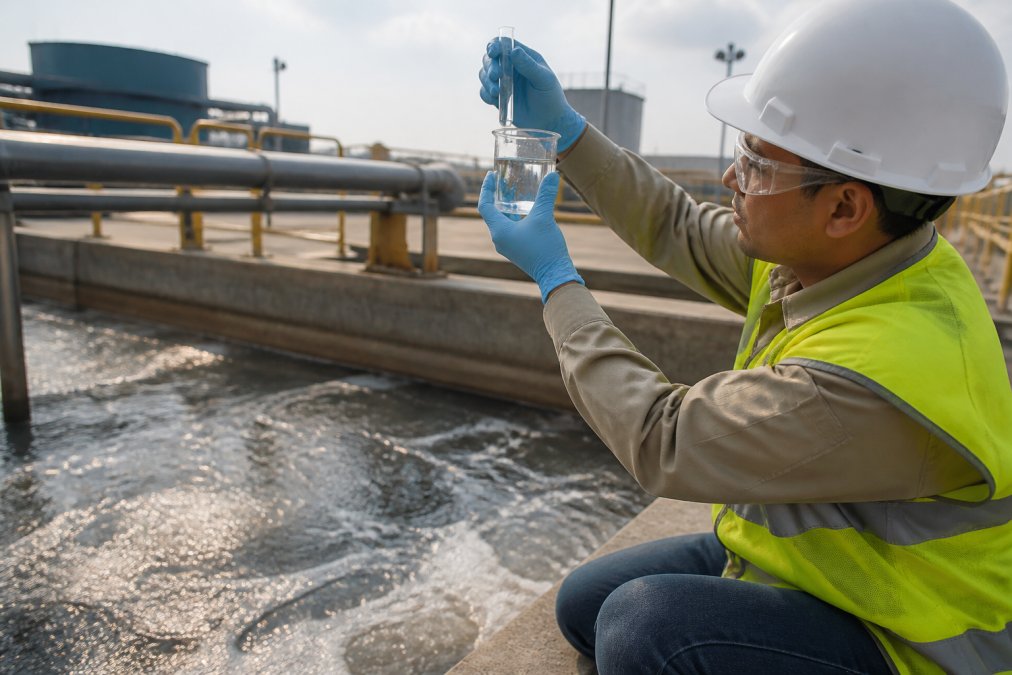
- Test water quality monthly
Choosing Between Softening, Inhibition, and Descaling
These are three different jobs, and mixing them up wastes money.
- Ion-exchange softening removes calcium and magnesium before water enters the system, the most thorough option for hard water, but it requires salt, regeneration, and a brine discharge path.
- Scale inhibition adds a small chemical dose that keeps minerals suspended so they leave with the water instead of sticking to surfaces. Common in cooling towers and once-through systems where full softening is impractical.
- Descaling removes scale already formed. Acid-based descalers work but are aggressive on metal; a vinegar flush is safe for small fixtures and aerators, not a scaled heat exchanger.
Environmental Impact of Scale-Prevention Chemicals
Scale-prevention chemicals keep equipment clean, but they do not vanish after use. Softener discharge carries salt and other dissolved solids into wastewater systems.
What to watch:
- Discharge rules: check local limits before choosing a chemical
- Dosing accuracy: over-dosing wastes money and adds pollution
- Alternatives: some systems use physical or magnetic treatment instead
- Maintenance: a well-tuned system needs less chemical overall
DIY vs. Professional Intervention: Cost-Benefit Analysis
DIY works for small, steady operations. Professional support pays off when downtime is expensive.
Ask three questions:
- What does an hour of downtime cost you? If it is high, do not gamble on DIY.
- Do you have staff to monitor and maintain equipment? Treatment systems need attention.
- How fast do you need to scale? Setup and testing take time you may not have.
Common Mistakes When Scaling Water Supply
Most failures when you scale water supply come from a short list of avoidable errors:
- Sizing systems to average demand instead of peak demand
- Ignoring pipe corrosion until flow drops
- Skipping water testing before choosing treatment
- Relying on a single supplier with no backup
- Treating scale as a nuisance instead of a capacity problem
- Forgetting that dissolved solids build up over time
Frequently Asked Questions
What are the primary challenges when scaling water supply for industrial facilities?
The biggest challenges are matching peak demand without overbuilding infrastructure, managing water quality as volume increases, and avoiding supply chain disruptions. Industrial facilities often underestimate peak summer demand, especially data centers where cooling loads spike. A second challenge is maintaining consistent water chemistry. As flow rates change, scale formation and corrosion risks shift, requiring adjustments to treatment or sourcing. Finally, logistics: relying on a single supplier or delivery model creates vulnerability if that source fails during critical periods.
How do data centers calculate their water cooling requirements?
Data centers calculate cooling water needs by totaling the heat output of all IT equipment, then factoring in the cooling system's efficiency. A common rule is that every 1 kW of IT load requires roughly 0.5 to 1.5 liters per minute of cooling water, depending on the cooling method. Operators also add a safety margin for peak summer temperatures and redundancy. Regular monitoring of makeup water volume and evaporation rates helps refine the estimate over time, so you can scale supply without overprovisioning.
What is the difference between water scaling and scaling a water supply system?
Water scaling refers to mineral buildup, mainly calcium carbonate and magnesium, inside pipes and equipment. Scaling a water supply system means expanding capacity, such as adding tanks, treatment units, or new sources to meet higher demand. The two are related: as you scale supply, you may introduce harder water or different flow rates that accelerate scaling. Addressing both together prevents flow restriction and thermal efficiency loss. A scaling supply plan should include water quality testing and scale prevention from the start.
How can businesses ensure water quality during rapid supply expansion?
Test water from any new source before integrating it. Check for dissolved solids, pH balance, and carbonate hardness, because these affect scale and corrosion. If blending sources, monitor the mixture to avoid sudden chemistry shifts. Install sediment filters and consider ion exchange or reverse osmosis if hardness is high. Keep records of test results and adjust treatment as volume changes. For bulk purchases, request a certificate of analysis from your supplier for each batch to confirm it meets your equipment specifications.
Scaling water supply is really a planning problem, not a volume problem. Measure your peak, find your bottleneck, and build a buffer before you need it. Our True North, LLC supplies high-volume, clean alkaline water with a simple pickup process, consistent quality, and a flexible schedule that fits demanding operations. Get a free estimate from Our True North, LLC and lock in reliable water access before your next peak season.