 how-to
Best Ways to Manage Bulk Water for Industrial Operations
Table of Contents
- Step 1: Calculate Your Daily Bulk Water Requirements
- Step 2: Choose Industrial Water Storage Solutions That Fit Your Site
- Step 3: Meet Data Center Cooling Water Requirements Without Downtime
- Step 4: Plan Bulk Water Delivery Logistics and Pickup Schedules
- Step 5: Maintain Water Quality With Filtration and Disinfection
- Step 6: Build a Long-Term Maintenance Schedule for Bulk Water Systems
- Common Mistakes to Avoid When You Manage Bulk Water
- Frequently Asked Questions
Last Updated: September 14, 2026
Step 1: Calculate Your Daily Bulk Water Requirements
The best ways to manage bulk water start with an honest number, not a guess. Before you buy a single tank or schedule a pickup, you need to know exactly how much water your operation consumes on an average day and on its worst day.
Daily bulk water requirement is the total volume of potable water an operation consumes in 24 hours across all uses, including process water, cooling, sanitation, and crew hydration.
To calculate it, log consumption for two weeks. Record meter readings at the same time daily, then separate usage by function. A data center cooling loop, for example, behaves very differently from a construction site's drinking stations. Once you have a baseline, add a buffer for peak demand. Many operations find that summer spikes push consumption well above the annual average, so plan for the hot months, not the mild ones.
EPA WaterSense program guidance on water efficiency
Step 2: Choose Industrial Water Storage Solutions That Fit Your Site
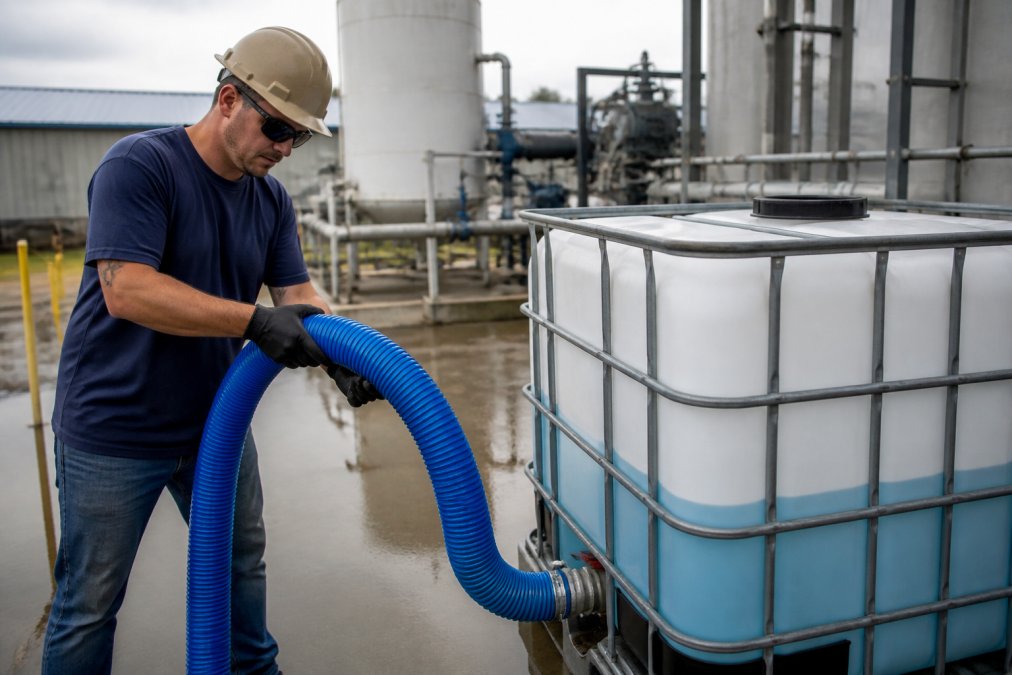
Industrial water storage solutions range from food-grade poly tanks to stainless steel vessels, and the right pick depends on volume, footprint, and how long the water will sit. The material decision is not cosmetic, it determines whether the water inside stays potable, whether the tank survives a decade of UV exposure, and whether your downstream treatment system has to work harder than it should.
Matching Tank Type to the Job
- Polyethylene (poly) tanks: Lowest upfront cost, easy to install, widely available in food-grade grades. Best for potable and alkaline water at moderate volumes. Weaker against long-term UV exposure unless the resin is formulated with UV inhibitors, and less tolerant of very high temperatures.
- Stainless steel tanks: Higher cost, superior for long-term stockpiling and temperature-sensitive sites. Inert to most water chemistry, including elevated pH. Requires correct weld quality and passivation to avoid corrosion at seams.
- Concrete cisterns: Permanent infrastructure for rainwater harvesting and large-scale reserves. Excellent thermal mass, but the interior must be sealed with a potable-water-rated coating or liner, and concrete can affect pH if unsealed.
- Fiberglass and composite tanks: Middle ground on cost, good corrosion resistance, and often available with food-grade interior gel coats. Confirm the specific resin system is rated for potable contact.
A common mistake is buying storage before calculating turnover. If water sits too long, quality degrades no matter how good the container is. Size for peak demand plus a buffer, but also size for the rotation interval you can realistically maintain.
Food-Grade Container Materials and Safety Standards
Container material safety is one of the most overlooked parts of bulk water management. A tank that isn't rated food-grade can leach chemicals into potable water, and no amount of downstream filtration fully fixes that. The fix is to verify certification before purchase, not after.
What to look for on the label and spec sheet:
- Food-grade resin or liner: The material in contact with water must be rated for potable water. For plastics, that generally means the resin is formulated without plasticizers or additives that can migrate into water.
- BPA-free construction: Bisphenol A is a known concern in older polycarbonate and some epoxy liners. Modern food-grade polyethylene is typically BPA-free, but confirm it in writing, do not assume.
- NSF/ANSI certification: NSF drinking water system standards publishes the certification criteria manufacturers must meet for potable water contact. Look for the specific standard cited on the tank or liner documentation, not a generic "food safe" claim.
- Opaque or UV-resistant walls: Translucent tanks let light through, which promotes algae growth. Opaque walls or a UV-blocking additive slow that process. If you can see the water line through the tank wall, light is reaching the water.
- Sealed, gasketed lids and screened vents: Keeps out debris, insects, and rodents while allowing pressure equalization. A vent that isn't screened is an open door.
- Alkaline compatibility: If you store alkaline water, confirm the liner or resin will not react with elevated pH. Some liners that are fine at neutral pH degrade faster at high pH.
Light-Blocking and Placement Considerations
Even a UV-resistant tank benefits from shade. Placing storage out of direct sun reduces thermal cycling, slows algae growth, and extends the life of gaskets and seals. If shade isn't available, consider a secondary opaque cover or a reflective wrap. Indoor placement solves the light problem but introduces its own constraints: floor loading, ventilation, and clearance for inspection and cleaning.
Turnover, Sizing, and the Cost Trade-Off
Storage volume should be driven by three numbers: average daily consumption, peak daily consumption, and your realistic rotation interval. If you cannot rotate the full volume within 6-12 months, either reduce storage size or plan a deliberate flush-and-refill cycle. Buying a tank larger than you can turn over is a common and expensive error, the water inside becomes a liability rather than a reserve.
Step 3: Meet Data Center Cooling Water Requirements Without Downtime
Data center cooling water requirements are unforgiving. A facility running 24/7 cannot absorb a supply gap, so the management plan has to assume that a delivery will eventually be late.
The practical answer is redundancy. Keep enough onsite storage to ride out a missed delivery window, and monitor tank levels in real time rather than relying on manual checks. Flow monitoring and consumption rate tracking turn a reactive scramble into a scheduled refill.
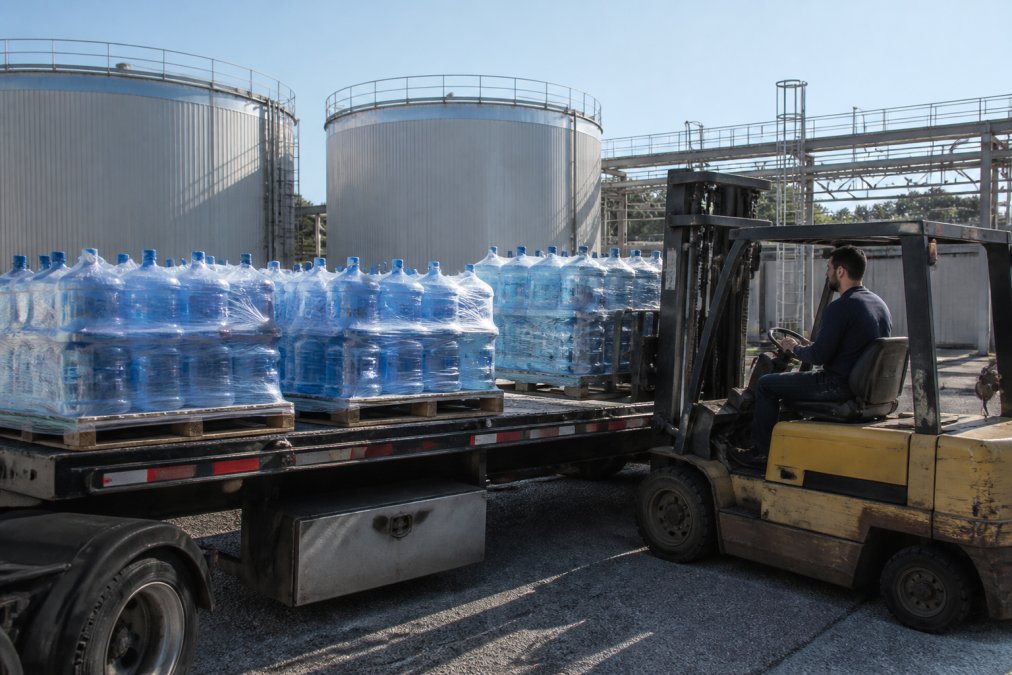
For high-volume users, a pickup model removes a common failure point. For high-volume users, a pickup model removes a common failure point. Our True North, LLC supplies high-volume alkaline water through a simple pickup process that eliminates delivery delays, which matters when a cooling system can't wait. Pair that with level sensors and you have a supply chain that doesn't depend on someone else's truck schedule.
Step 4: Plan Bulk Water Delivery Logistics and Pickup Schedules
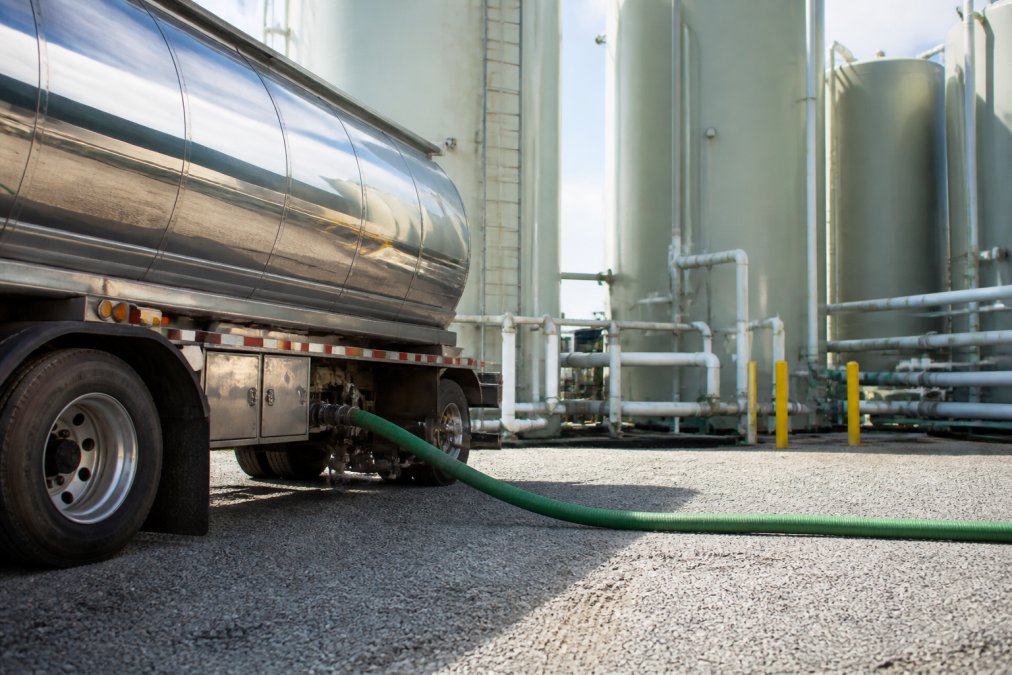
Bulk water delivery logistics come down to one question: how much buffer do you keep between "tank full" and "tank empty"? The answer determines whether you're managing supply or firefighting it.
Build a schedule around consumption rate, not calendar convenience. If your site burns through its reserve in five days, a weekly delivery leaves you exposed. Track usage metrics, set a reorder threshold at roughly 30% remaining, and confirm pickup capacity before you commit. Flexible pickup schedules let you align refills with actual demand rather than a fixed route.
Cost-Benefit Analysis: Delivery vs. Onsite Treatment
Delivery and onsite treatment solve the same problem in different ways, and the cheaper option depends on your volume and consistency of need.
| Factor | Bulk Delivery / Pickup | Onsite Treatment |
|---|---|---|
| Upfront cost | Low to moderate | High capital expenditure |
| Ongoing cost | Scales with volume | Fixed after install |
| Best for | Variable or spiky demand | Steady, very high demand |
| Maintenance | Minimal | Regular system servicing |
| Supply risk | Depends on scheduling | Depends on raw water source |
For most industrial sites with fluctuating demand, managed delivery or pickup wins on flexibility. Onsite treatment only pays off when volume is both high and predictable enough to justify the infrastructure.
Step 5: Maintain Water Quality With Filtration and Disinfection
Water quality is a process, not a purchase. Stored water needs active management to stay safe, because even clean water degrades over time.
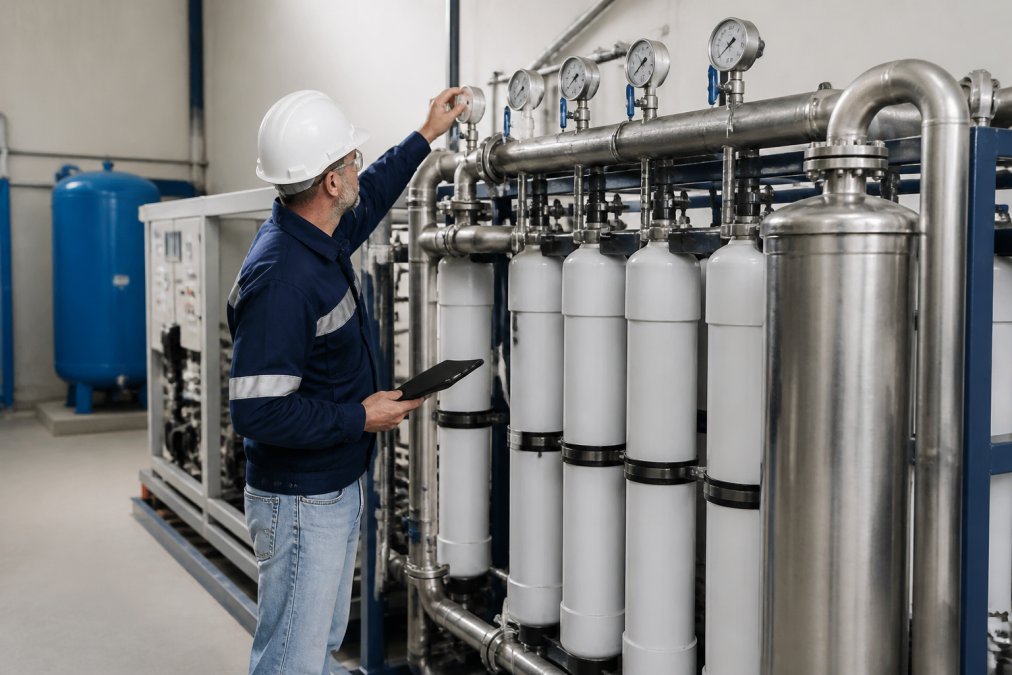
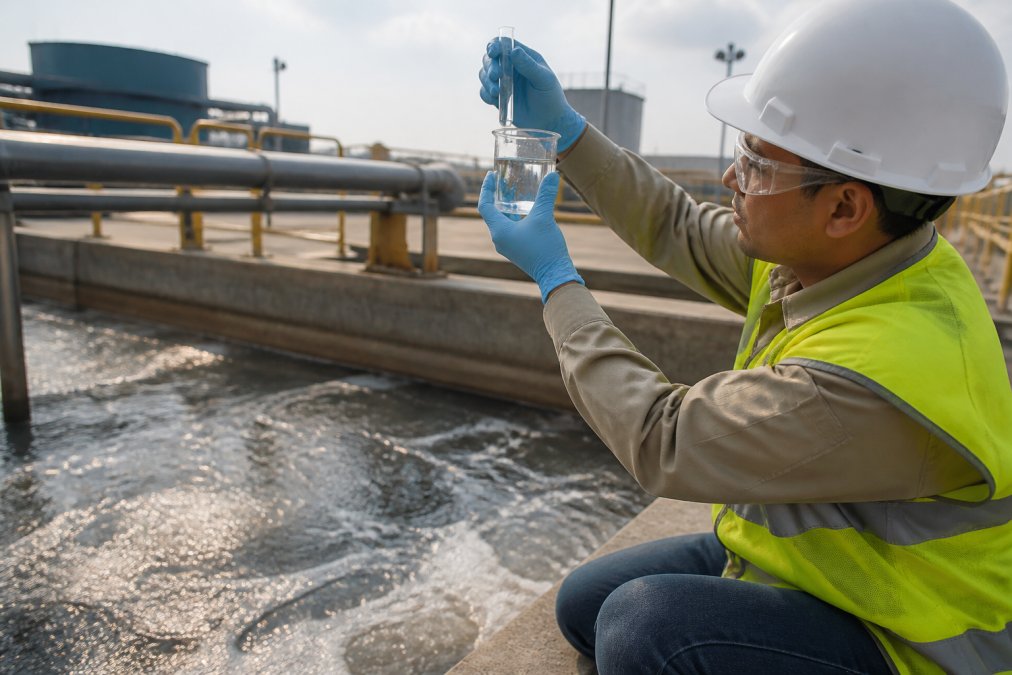
Filtration removes particulates; disinfection kills what's left. Common methods include chlorination, UV treatment, and sand filtration, often layered for defense in depth. Test pH levels and microbial counts on a fixed schedule, and document every result. Sedimentation settles out heavy particles before they reach your filters, which extends their life. A written water treatment protocol keeps results consistent across shifts and gives you a record if quality is ever questioned.
Step 6: Build a Long-Term Maintenance Schedule for Bulk Water Systems
A maintenance schedule is what separates a reliable bulk water system from a series of emergencies. Most guides stop at initial setup and never explain what happens to stored water at month six, month twelve, or year three. That is the gap this section closes: a 12-month-plus cadence for rotating, testing, and refreshing bulk water so quality does not quietly degrade while the tank sits full.
Why Stored Water Degrades Over Time
Even potable water drawn from a treated municipal source is not biologically inert. Residual disinfectant (chlorine or chloramine) dissipates over weeks, and once residual drops, any bacteria that entered during filling can multiply (Document Display (PURL) | NSCEP). Temperature swings accelerate the process: a tank that bakes in summer sun and cools at night creates condensation and pressure cycling that stresses seals. Dissolved minerals can precipitate and form scale on tank walls and downstream fixtures. The practical takeaway is that storage duration, not just storage volume, drives your maintenance interval.
The 12-Month Rotation and Refresh Cadence
A common pattern among facilities that avoid downtime is to treat every stored gallon as having a shelf life. A workable baseline:
- Months 1-3: Visual inspection of tanks, lids, vents, and seals. Confirm no algae, no standing water on the lid, no pest intrusion. Log tank levels against consumption.
- Months 3-6: Full water quality test at the tank and at the point of use, pH, residual disinfectant, microbial indicators. If residual disinfectant has fallen below the level your protocol requires, re-treat or rotate the volume.
- Months 6-12: Rotate at least a portion of stored volume through normal use and refill with fresh water. Water that has sat untouched for a full year should be treated as suspect until tested, regardless of how clean the tank looks.
- Annually: Full system audit, tank interior inspection where accessible, gasket and seal replacement on the manufacturer's interval, filter replacement, and a written review of consumption data against capacity.
If your site cannot rotate water through normal use, plan a deliberate flush-and-refill cycle. Standing water that never moves is the single most common cause of quality complaints in bulk storage.
Testing, Documentation, and Sensor Calibration
Testing without documentation is just a snapshot. Keep a single log that captures date, tester, method, result, and corrective action. That log is what lets you spot a slow trend, a gradual rise in microbial counts, a falling pH, a creeping consumption rate, before it becomes an outage or a failed inspection.
Calibrate level sensors, flow meters, and any inline quality probes on a fixed interval, typically twice a year or per the manufacturer's specification. A miscalibrated level sensor is worse than no sensor, because it produces confident wrong numbers. Cross-check sensor readings against manual measurements periodically.
- Inspect tanks, lids, vents, and seals monthly
- Test water quality quarterly at tank and point of use
- Rotate or refresh stored volume at least every 6-12 months
- Replace filters on the manufacturer's interval
- Flush low-use lines to prevent stagnation
- Calibrate monitoring sensors twice a year
- Review consumption data against capacity each season
- Conduct an annual full-system audit with written findings
Seasonal Adjustments
Summer heat and peak demand compress your maintenance window. Increase inspection frequency during hot months, verify that UV-resistant or opaque tank materials are actually blocking light, and confirm that your reorder threshold accounts for the higher burn rate. Winter brings its own risks: freeze-thaw cycling can crack fittings and compromise seals, so inspect exposed plumbing before the first hard freeze and after the last one.
Common Mistakes to Avoid When You Manage Bulk Water
The costliest errors in bulk water management are planning failures, not equipment failures. Avoiding them is cheaper than fixing them.
The most common mistake is sizing storage to average demand instead of peak demand. A second is ignoring container material safety and storing potable water in a non-food-grade tank. A third is treating delivery as guaranteed; without a buffer, one late truck becomes an outage. Finally, many sites skip documentation, which makes it impossible to spot a slow leak or a rising consumption trend until it becomes a crisis.
Frequently Asked Questions
What is the best way to store large amounts of water for industrial use?
Use food-grade containers made from materials like polyethylene or stainless steel that meet FDA standards for potable water. For industrial volumes, above-ground tanks with UV-resistant liners work well. Store in a cool, shaded area away from chemicals. Regular testing for pH levels and bacterial growth is essential. Many Texas facilities rely on bulk water delivery logistics to refill these tanks on a scheduled basis, avoiding the need for massive permanent storage.
How do you maintain water quality in bulk storage tanks?
Maintain water quality by testing pH levels and chlorine residual weekly. Apply chlorination or UV treatment as needed to prevent bacterial growth. Clean tanks every 6 to 12 months using approved methods. Keep tanks sealed to prevent contamination from dust or pests. For data center cooling water requirements, use filtration and sedimentation removal to protect equipment. Document all tests to meet water safety standards.
What are the logistical requirements for high-volume water supply?
High-volume water supply requires calculating daily consumption rate, securing reliable transport, and planning storage capacity. For bulk water delivery logistics, schedule deliveries or pickups to match usage spikes. Monitor tank levels with automated systems to avoid shortages. In Texas, industrial sites often use a pickup model to eliminate delivery delays. Always have a backup source and maintain clear communication with your supplier.
How can data centers optimize water cooling efficiency?
Optimize cooling by using water-efficient fixtures and monitoring systems to track flow. Implement filtration and disinfection to maintain water quality, reducing scale and corrosion. Consider bulk water delivery logistics for consistent supply during peak summer months. Regular maintenance of cooling towers and pH balancing prevents downtime. Data center cooling water requirements vary by load, so audit usage monthly and adjust storage capacity accordingly.
Managing bulk water at industrial scale is a logistics problem as much as a supply problem. The operations that stay ahead calculate demand, store safely, and schedule refills before they're urgent. Our True North, LLC supplies high-volume alkaline water with a simple pickup process, consistent water quality, and a flexible schedule built for demanding sites. Get a free estimate and lock in a supply that keeps your operation running.