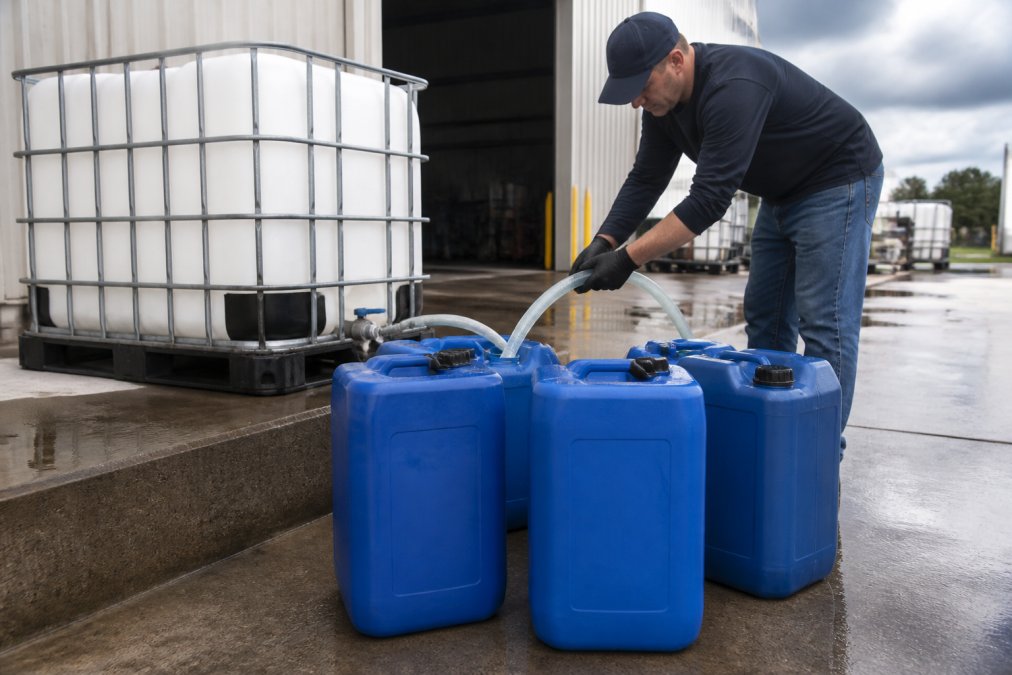
 comparison
Waterrunner Alternatives for Industrial Use
Table of Contents
- Why Industrial Operations Are Moving Beyond Waterrunner
- Bulk Water Delivery for Data Centers and High-Volume Operations
- Mobile Water Treatment Systems as Waterrunner Alternatives
- Emergency Water Supply for Construction Sites and Fire Response
- Onsite Water Systems and Rainwater Harvesting
- ROI Calculator: Delivery vs. Onsite Systems
- Regulatory Compliance and Water Quality Standards
- Hybrid Water Strategies: Combining Delivery, Treatment, and Storage
- Frequently Asked Questions
Why Industrial Operations Are Moving Beyond Waterrunner
Industrial facilities face a critical choice: rely on traditional delivery services or explore alternatives offering greater control and flexibility. Waterrunner alternatives for industrial use have become increasingly viable as operations managers recognize the limitations of single-supplier dependency, unpredictable delivery windows, and rising costs.
The shift isn't about rejecting delivery entirely, it's about matching your water strategy to operational reality. Data centers running 24/7 can't afford downtime waiting for trucks. Construction sites need flexibility standard schedules don't provide. Fire departments require immediate access to large volumes without advance notice. Our True North, LLC has worked across these sectors, and the pattern is clear: operations that diversify water sourcing outperform those locked into a single approach.
This guide explores the full spectrum of waterrunner alternatives, from bulk delivery optimization to onsite treatment systems, emergency supply solutions, and hybrid strategies that provide redundancy when it matters most.
Bulk Water Delivery for Data Centers and High-Volume Operations
Bulk water delivery remains foundational for many industrial operations, but success depends on understanding reliability gaps.
How bulk delivery works for 24/7 facilities
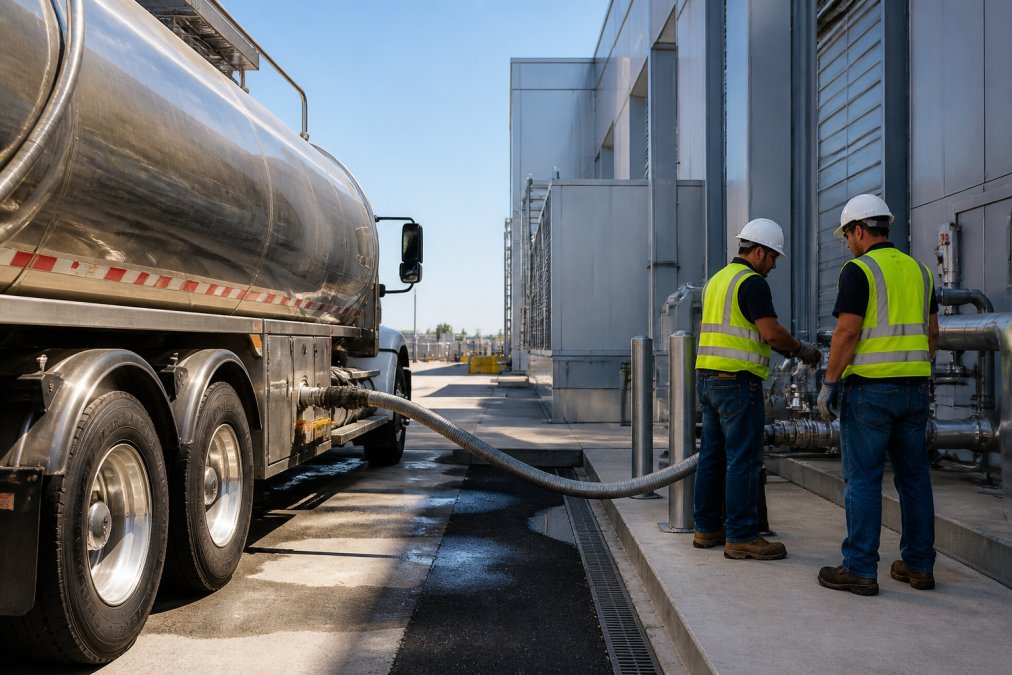
Bulk water delivery operates on a scheduled model: you order a volume, a tanker arrives at a predetermined time, and water transfers into onsite storage or directly into your system. For data centers, this works when demand is predictable and storage capacity bridges gaps between deliveries. Most facilities maintain 2-3 days of reserve supply. A missed delivery or unexpected surge in cooling demand can quickly deplete reserves.
Response time matters enormously. Standard delivery windows (24-48 hours) work for planned maintenance but expose weakness during emergencies. A cooling system failure during peak summer heat reveals the vulnerability of delivery-only sourcing.
Comparing delivery reliability and response times
Foster Fuels and similar regional providers typically guarantee delivery within 24-48 hours during normal conditions. Summer peaks stress these systems significantly.
Our True North, LLC addresses this through a pickup model that eliminates the waiting variable entirely. Your team controls timing, picking up water when needed in required volumes with no external scheduling dependency. For operations with transport capacity, this eliminates the single biggest reliability risk: the missed or delayed delivery window.
Mobile Water Treatment Systems as Waterrunner Alternatives
When bulk delivery can't meet needs, either due to extreme volume requirements or quality specifications beyond standard potable supplies, mobile treatment systems provide rapid onsite purification deployment.
How reverse osmosis and mobile units reduce downtime
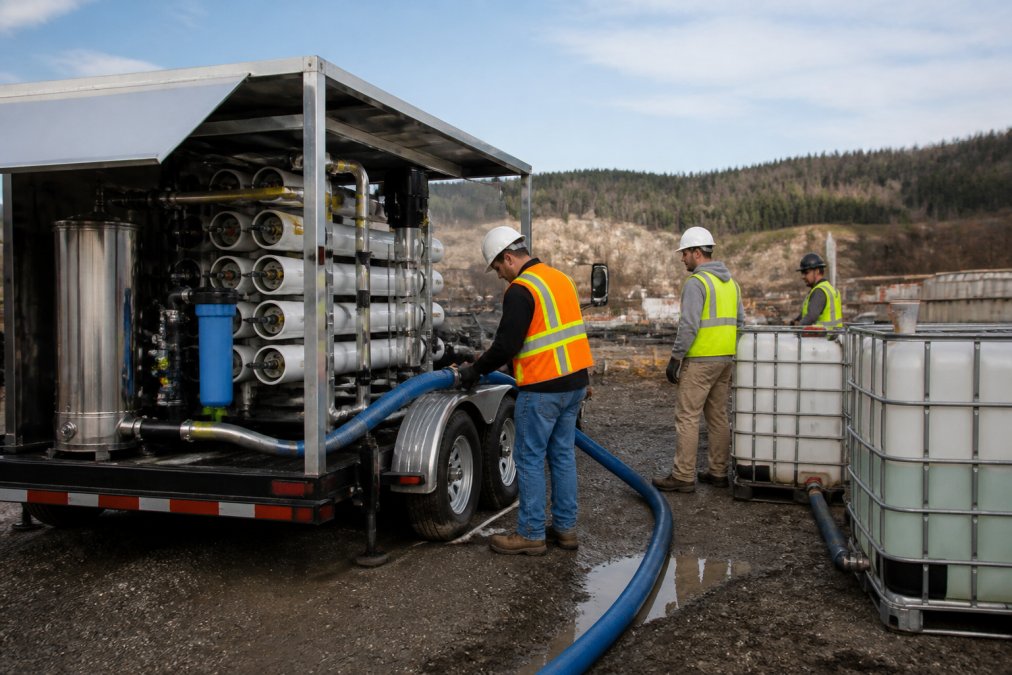
Mobile water treatment systems, particularly reverse osmosis (RO) technology, process raw water sources into usable supply within hours of deployment. These units arrive on trailers, connect to your water source, and begin producing treated water immediately.
RO systems remove dissolved solids, contaminants, and impurities to meet EPA and WHO drinking water standards (the EPA). Deployment time typically ranges from 4-8 hours for standard installations, with emergency setups possible in 2-3 hours.
Rapid deployment for emergency water supply
AMPAC USA specializes in rapidly deployable containerized RO units engineered for rough handling and remote deployment. Capacity ranges from small portable units to large trailer-mounted systems processing 80,000 GPD. The real advantage emerges during crises: a construction site hit by drought, a manufacturing facility facing municipal water restrictions, or a data center experiencing unexpected cooling demand can access water within hours rather than days.
Nalco Water (an Ecolab company) offers rental and fully managed mobile systems with comprehensive technical support and automatic monitoring.
Emergency Water Supply for Construction Sites and Fire Response
Construction and emergency response operate under fundamentally different constraints than permanent industrial facilities. Water needs are temporary, volumes fluctuate wildly, and reliability directly impacts safety and project timelines.
On-site storage and pickup models for construction crews
Construction sites require water for crew hydration, dust control, equipment cleaning, and concrete mixing. Pickup-based sourcing addresses scheduling friction by allowing managers to arrange supply at the start of the week, mid-week if demand spikes, or immediately if an emergency arises. Our True North, LLC's flexible pickup schedule eliminates the constraints that make delivery problematic for variable-demand operations.
Storage capacity on construction sites is typically limited to 500-2,000 gallons through portable tanks. Multiple small pickups cost less than emergency delivery premiums or oversized storage infrastructure.
Fire department water requirements and supply options
Fire departments face massive volume requirements on unpredictable schedules. A structure fire or training exercise can demand 10,000+ gallons in hours. Municipal water systems can be inadequate during simultaneous emergency demands across a region.
Bulk water delivery services like Foster Fuels provide dedicated supply for fire systems and emergency response. However, delivery-dependent sourcing creates vulnerability: during widespread emergencies when multiple departments compete for trucks, response times degrade.
Onsite Water Systems and Rainwater Harvesting
The most fundamental waterrunner alternative is eliminating the need for external sourcing entirely. Onsite water systems and rainwater harvesting reduce municipal water reliance, lower long-term costs, and provide operational independence.
Reducing municipal water reliance with storage capacity
Onsite water systems begin with storage. A facility storing 50,000-100,000 gallons onsite can operate independently of delivery services for extended periods. Rainwater harvesting captures precipitation from roofs and surfaces, directing it into storage tanks. In regions receiving 30-40 inches annual rainfall, a 10,000 square foot roof can capture 200,000+ gallons annually (the EPA). This water, combined with treatment for non-potable uses (cooling, irrigation, dust control), significantly reduces external supply reliance.
The economics depend on local water costs and rainfall patterns. In areas where municipal water costs exceed $3-5 per 1,000 gallons, onsite harvesting breaks even within 5-10 years.
Greywater recycling and wastewater reclamation for process water
Greywater from sinks, showers, and cleaning operations can be treated and recycled for non-potable uses. Industrial facilities can recycle process water, cooling tower discharge, and equipment wash water back into the same systems after basic filtration.
This approach dramatically reduces total water consumption. A data center using 10,000 gallons daily for cooling might recycle 6,000-7,000 gallons back into the cooling loop after treatment, reducing external supply needs to 3,000-4,000 gallons. Over a year, this cuts external sourcing by 60-70%.
ROI Calculator: Delivery vs. Onsite Systems
The decision between delivery-based sourcing and onsite systems hinges on financial analysis. A facility consuming 5,000 gallons daily faces fundamentally different economics than one consuming 50,000 gallons daily.
Calculating CAPEX, OPEX, and total cost of ownership
Capital Expenditure (CAPEX) includes storage tanks, treatment equipment, and installation. A 50,000-gallon storage system costs $15,000-25,000 installed. A basic rainwater harvesting system costs $8,000-15,000. RO treatment equipment ranges $20,000-50,000 depending on flow rate and purity requirements.
Operating Expenditure (OPEX) includes water procurement, treatment chemicals, equipment maintenance, and labor. A facility purchasing 5,000 gallons daily through bulk delivery at typical regional rates pays $2,000-3,000 monthly for water alone.
Total Cost of Ownership (TCO) amortizes CAPEX over the system lifespan (10-15 years) and adds annual OPEX. A $50,000 storage and treatment system, amortized over 10 years at $5,000 annually, plus $25,000 annual OPEX, costs $30,000 annually. Divided across 5,000 gallons daily (1.825 million gallons annually), this equals $0.016 per gallon, roughly 40-50% less than delivery-based sourcing.
Break-even analysis for different operation sizes
Small operations (under 5,000 gallons daily): Delivery-based sourcing is typically more cost-effective. Our True North, LLC's pickup model bridges this gap, reducing delivery scheduling friction without requiring capital investment.
Medium operations (5,000-15,000 gallons daily): Hybrid approaches work best. Maintain onsite storage (20,000-30,000 gallons) to buffer against delivery delays and allow flexible sourcing. Break-even typically occurs within 3-5 years.
Large operations (over 15,000 gallons daily): Onsite systems with treatment become economically compelling. A facility consuming 30,000 gallons daily can install a complete onsite system for $100,000-150,000, achieving payback within 4-6 years and then operating at 50-60% lower cost indefinitely.
Regulatory Compliance and Water Quality Standards
Water quality and regulatory compliance are non-negotiable. Industrial water must meet EPA standards for cooling tower makeup water, process water, and potable uses.
EPA standards for cooling tower makeup water and process water
The EPA regulates cooling tower water under the Clean Water Act and Safe Drinking Water Act. Cooling tower makeup water must meet specific standards for pH (typically 6.5-8.5), hardness, alkalinity, and dissolved solids (the EPA). Process water standards vary by industry. Food and beverage manufacturing requires potable-grade water meeting NSF/ANSI 61 certification. Pharmaceutical manufacturing requires stricter purity, often USP (United States Pharmacopeia) grade.
Our True North, LLC delivers alkaline water meeting industrial standards for cooling and process applications. Consistent quality across pickups eliminates variability that sometimes occurs with delivery services.
NSF certification and testing requirements for alkaline water
NSF International certification verifies that water treatment systems and products meet health and safety standards. NSF/ANSI 61 certification, required for potable water contact surfaces, confirms that treated water won't introduce contaminants or health risks. Most industrial facilities should conduct quarterly water quality testing to ensure consistency and catch quality drift before it causes equipment problems.
Hybrid Water Strategies: Combining Delivery, Treatment, and Storage
The most resilient operations don't choose a single water sourcing method, they combine multiple approaches to achieve redundancy, cost efficiency, and operational flexibility.
When to use multiple suppliers for infrastructure redundancy
A data center relying on a single water source faces risk. Hybrid approaches eliminate this vulnerability. An effective hybrid strategy combines:
- Primary supply: Pickup-based sourcing through Our True North, LLC, providing flexible, reliable access without delivery scheduling constraints
- Secondary supply: Bulk water delivery from a traditional provider as backup for emergency situations or peak demand periods
- Tertiary supply: Onsite storage and rainwater harvesting for non-critical uses and extended independence
This three-tier approach ensures that if one source fails, operations continue. The cost of this redundancy is modest, typically 15-20% higher than optimizing for a single source.
Peak-demand planning and seasonal water strategies
Water demand varies seasonally. Data centers consume more cooling water during summer heat. Construction sites operate at higher intensity during dry seasons. Effective peak-demand planning requires forecasting. A facility that historically consumes 5,000 gallons daily but spikes to 12,000 during summer needs sourcing covering both baseline and peak.
Seasonal strategies adjust sourcing mix throughout the year. Winter months might rely primarily on onsite rainwater harvesting and recycled process water, reducing external supply needs. Summer peaks require full activation of all sourcing options.
Industrial operations that move beyond single-source water sourcing gain substantial advantages: lower costs, greater reliability, and independence from external supply disruptions. Our True North, LLC provides the flexible, high-volume pickup-based supply that serves as the foundation for these hybrid strategies. With consistent alkaline water quality and a simple pickup process, we eliminate delivery delays while allowing you to layer additional sourcing options around a dependable base supply. Get a Free Estimate to evaluate how our water supply can integrate into your facility's sourcing strategy.
Frequently Asked Questions
Q: What makes waterrunner alternatives better than traditional bulk water delivery?
A: Alternatives vary by operation type. Pickup-based models eliminate delivery delays and give you control over scheduling. Mobile treatment systems reduce downtime by producing water on-site. Onsite storage and rainwater harvesting cut municipal water reliance entirely. The best choice depends on your volume needs, facility layout, and whether you prioritize cost savings or operational reliability. Data centers often prefer systems with infrastructure redundancy to avoid emergency shortages.
Q: How do bulk water delivery for data centers compare to onsite treatment systems in terms of cost?
A: Bulk delivery has lower upfront CAPEX but higher ongoing OPEX through recurring delivery fees. Onsite systems require significant initial investment in equipment and storage capacity but reduce per-gallon costs over time. For data centers with consistent, high-volume cooling water needs, onsite systems can offer better long-term ROI. Hybrid approaches, combining occasional delivery with onsite storage, balance flexibility and cost control.
Q: What water quality standards must emergency water supply for construction sites meet?
A: Construction sites require non-potable water for dust control and site operations, which must meet EPA standards for suspended solids and turbidity. Potable water for crew hydration requires NSF certification and compliance with EPA drinking water standards, including limits on bacteria and chemical contaminants. Alkaline water used in equipment or cooling systems may need additional testing for pH and mineral content. Always verify your supplier's certifications and request recent water quality test results before committing to a contract.
Q: Can we use rainwater harvesting or greywater recycling to replace bulk water delivery entirely?
A: Rainwater harvesting and greywater recycling reduce reliance on bulk delivery but rarely eliminate it completely. Rainwater systems depend on seasonal precipitation and require significant storage capacity. Greywater recycling works well for non-potable process water and cooling tower makeup water but may not meet quality standards for sensitive equipment. Most industrial operations use hybrid strategies: onsite systems for baseline demand, bulk delivery for peak seasons, and rainwater harvesting to offset costs. This approach provides infrastructure redundancy and protects against supply disruptions.
This article was written using GrandRanker
Frequently Asked Questions
Q: What makes waterrunner alternatives better than traditional bulk water delivery?
A: Alternatives vary by operation type. Pickup-based models eliminate delivery delays and give you control over scheduling. Mobile treatment systems reduce downtime by producing water on-site. Onsite storage and rainwater harvesting cut municipal water reliance entirely. The best choice depends on your volume needs, facility layout, and whether you prioritize cost savings or operational reliability. Data centers often prefer systems with infrastructure redundancy to avoid emergency shortages.
Q: How do bulk water delivery for data centers compare to onsite treatment systems in terms of cost?
A: Bulk delivery has lower upfront CAPEX but higher ongoing OPEX through recurring delivery fees. Onsite systems require significant initial investment in equipment and storage capacity but reduce per-gallon costs over time. For data centers with consistent, high-volume cooling water needs, onsite systems can offer better long-term ROI. Hybrid approaches—combining occasional delivery with onsite storage—balance flexibility and cost control.
Q: What water quality standards must emergency water supply for construction sites meet?
A: Construction sites require non-potable water for dust control and site operations, which must meet EPA standards for suspended solids and turbidity. Potable water for crew hydration requires NSF certification and compliance with EPA drinking water standards, including limits on bacteria and chemical contaminants. Alkaline water used in equipment or cooling systems may need additional testing for pH and mineral content. Always verify your supplier's certifications and request recent water quality test results before committing to a contract.
Q: Can we use rainwater harvesting or greywater recycling to replace bulk water delivery entirely?
A: Rainwater harvesting and greywater recycling reduce reliance on bulk delivery but rarely eliminate it completely. Rainwater systems depend on seasonal precipitation and require significant storage capacity. Greywater recycling works well for non-potable process water and cooling tower makeup water but may not meet quality standards for sensitive equipment. Most industrial operations use hybrid strategies: onsite systems for baseline demand, bulk delivery for peak seasons, and rainwater harvesting to offset costs. This approach provides infrastructure redundancy and protects against supply disruptions.